More News on Medicare and CGM’s

Laddie_Head SquareOn Friday I received a copy of an email from a Medtronic spokesperson announcing an important development in the battle to have continuous glucose monitors (CGM) covered by Medicare.  This is an excerpt from her email:

We have some great news to share on the Medicare CGM Access Act! Late yesterday, Representatives Tom Reed, Dianne DeGette and Ed Whitfield introduced companion legislation into the House of Representatives.

As you’ll likely remember, back in July Senators Susan Collins and Jeanne Shaheen introduced nearly identical legislation to ensure access to CGM technology for people on Medicare. We can’t thank you enough for all the wonderful social media activity you’ve created to drive the community to urge their Senators to co-sponsor the bill. However, as you likely know, in order for a bill to become a law, it must be passed in both the Senate and the House before going to the President to sign or veto. So, this “companion bill”, which is nearly identical in content with a new number (HR 5644), is a key step in the legislative process.

Of course, this means it’s time to rally the community again, urging people with diabetes along with their friends and family to encourage their local Representatives  (as well as their Senators) co-sponsor the legislation.

Once again, JDRF has provided great resources where people can read about the issue as well as identify and easily contact their own Representatives and Senators.

You can find these resources here. You can also feel free to share our blog post.

For those on Medicare and those of us soon to be there, this is hugely important.  My CGM has been life-changing and I believe that it keeps me safe and improves my blood glucose profile on a daily basis.  My co-blogger Sue from Pennsylvania has repeatedly shared the nightmare that she lives in because of the non-coverage of her husband’s CGM by Medicare.

What can you do?

    1. Contact your U.S. Representative to ask him/her to co-sponsor H.R. 5644 and advocate for seniors with diabetes who require a CGM.
    2. If you have not already done so, contact your Senators to co-sponsor S. 2689 and advocate for seniors with diabetes who require a CGM.
    3. Sign the JDRF petition: Tell Medicare to Cover Continuous Glucose Monitors for People with Diabetes.  As of 9/21/14 the petition has 56,618 signatures and we hope to reach 100,000 signatures.
    4. Forward my blog to your friends and family urging them to take action.
    5. If you are a blogger, please share this with your readers.  If you would like to copy my blogpost word for word, please do so!

The links provided by JDRF make it simple to contact your Senators and Representative.  By filling in your name and address, your appeal is automatically sent to the correct government officials.  You are able to personalize your message by adding a few sentences to explain why this is important to you.  I used to be worried about trying to be an advocate.  JDRF has streamlined the process and made it “easy-peasy.”  You can complete Steps 1-3 in about 5 minutes.

I thank you for reading this.  More importantly, I thank you for contacting your elected officials to help ensure that your fellow Americans on Medicare have access to continuous glucose monitors.

If there is anyway that I can help you, please contact me.

Conversations: Two Spouses of Type 1 Diabetics

Conversations Banner_T1Spouse

Sue B_Head SquareSue from New York and I first came into contact with each other through the American Diabetes Association message board. My husband had gone on Medicare and discovered that his Continuous Glucose Monitor (CGM) would not be covered by Medicare, and I needed to get in contact with someone who might answer some questions as to what I needed to do to fight the guideline that Medicare had that prevented the coverage of the CGM. Sue from New York posted an answer to my CGM inquiry even though she wasn’t on Medicare as yet. I think that we may have chatted very briefly on the forum before I asked her for her email address so that we could communicate privately. After emailing for a month back and forth, I asked her for her phone number. I thought it would be easier to speak on the phone. She sent me her phone number and we started talking on the phone a few times a week and really became good friends. At some point, she suggested that I contact Laddie about doing some blogs on Laddie’s Test Guess and Go site.

Sue and her husband decided to take a road trip last week. They started off in Maryland, then went to West Virginia, and on the final leg of their journey came to Harrisburg, Pennsylvania, where I live and spent a few days with my husband Marc and me. We had a great time meeting in person and being able to speak to each other face-to-face. Sue and I thought it would be interesting for me to have a conversation with her husband Steve as spouses of diabetics. She, in turn, had a conversation with my husband Marc. The following is a result of my conversation with Steve.

Sue from PA: What was your reaction when Sue was diagnosed as a diabetic?

SteveS_Head SquareSteve: I thought that since we had gotten through it with our son Steve, who was diagnosed as Type 1 at age 4, that hers wouldn’t be as bad because she was diagnosed as a Type 2. I was worried, but I knew I could handle it.

Steve: How was it when Marc was diagnosed for you, because you hadn’t been through it?

Sue from PA: Initially when Marc came home from the doctor and told me he had diabetes, I was pretty shocked. Then I started to educate myself about diabetes and I realized that I had a misconception of what it involved food-wise. I always thought that you couldn’t have sugar. I soon learned that sugar was the least of my worries. It was actually carbohydrates that were the real villains since they turn into sugar.

Sue from PA: What do you do to help Sue with her diabetes management?

Steve: I keep track of her monitoring, make sure that she is taking her medications, help her with her placement of her pods (OmniPod is the pump that she uses to deliver her insulin), help her when she is hypoglycemic and make sure she gets something to eat or drink to bring her blood sugar back to normal. At times I have taken her place in watching the grandchildren and have taken them places where she would have taken them normally, and at times I have driven her to the store when she has needed to get something and didn’t feel as though she could drive.

Steve: How long has Marc had his diabetes, and how have you taken care of him?

Sue from PA: Marc has had his diabetes for approximately 19 years. I am very fortunate in that he can do his everyday care by himself. He is totally responsible for his insulin pump and when he had a CGM he was totally responsible for changing his sensors. Basically, I manage his food by counting his carbs for each meal that I prepare. I am responsible for saving his life when he gets hypoglycemic, and I am constantly reminding him that he owes me big time since I’ve had to save him more times that I can count of my two hands. I have learned to give him the glucagon when he blacks out and I have leaned to recognize the symptoms when he starts to go low.

Steve: Sue has also told me that she doesn’t know what she would have done without me and how grateful she is that I have been able to help her through this.

SuePA_SteveNYSue from PA: Emotionally, what’s it been like to live as the spouse of a Type 1 diabetic?

Steve: At times it has been very stressful. At times I am truly emotional over it. Sometimes I have been scared but I made a commitment in my wedding vows, in sickness and in health to love her always and I would never leave her because of her health.

Steve: On that same topic, how has it been for you?

Sue from PA: (Heavy sigh). It’s been a challenge. I don’t think there is ever a day when I don’t worry about him. One of the biggest issues for us is the lack of his having a CGM due to being on Medicare and them not covering it. When my children became independent and were able to be out on their own at night, as most mothers do, I never truly fell into a deep sleep until they were home and the house was locked up. Now I never fall into a deep sleep even though my husband is right beside me. I am always aware that in the snap of a finger he can go into a hypoglycemic low, at which point I might have to jump out of bed, and I literally mean jump, to make sure to get juice or a soft drink into him to prevent him from going unconscious. During those times when it’s happening so fast that he does become unconscious, I need to give him the glucagon. Even though I’ve done it numerous times, my hands still shake and my heart beats almost out of my chest. I’m just always worried when I am not with him. I can understand how you feel, Steve, because I feel the same way. I will always honor my wedding vows. But you have to make light of it sometimes to be able to live with the situation. I can truly say that seeing someone you love having a hypoglycemic low is something you never forget. They are drenched in sweat, their eyes are unfocused and they have no idea of what is happening. It’s frightening.

Sue from PA: Steve, do you have anything else you want to add to this conversation?

Steve: In less than a year Sue will turn 65 and will go on Medicare. I hope and pray that when her insurance no longer covers her, Medicare will be there to cover her with her diabetic supplies and necessary devices that she needs, i.e. her CGM.

Sue from PA: Diabetes had been a true education for me. Because of Medicare’s lack of coverage of the CGM, I have become an advocate. I have done things I would have never thought I could do. I blog, I did a podcast, I wrote an article for my local newspaper, and recently I have become involved in S-2689, the Medicare CGM Access Act that was introduced into the Senate on July 30, 2014 by Senators Susan Collins (R-ME) and Jeanne Shaheen (D-NH). It addresses the growing concern that people with Type 1 diabetes who are over the age of 65 cannot obtain coverage for the critical and potentially life-saving Continuous Glucose Monitor (CGM) through Medicare, even if they used these technologies successfully prior to becoming Medicare eligible. A few weeks ago I sat in on a telephone conference with representatives from Dexcom, Medtronic, J & J and Animas and also a representative from the endocrinologists association, among others. I was one of just a few to be invited to sit in on this telephone conference.

Sue from PA: I thank Steve for having this conversation with me. Most of the people I come into contact with are the diabetics. I’ve not had much contact with the spouses and it’s good to be able to speak about what it’s like for us, the caretakers. I hope that we can have more conversations in the future.

In closing, I would like to ask everyone reading this who has not yet signed the JDRF Petition or clicked on the link that asks their Senators to support S-2689 to please do so. It’s so important to the many diabetics on Medicare who cannot get a CGM because it isn’t covered by Medicare. So many are on fixed incomes and can’t afford the cost of the CGM and the sensors.

Click here to email your U.S. Senators to urge them to co-sponsor legislation that would ensure Medicare covers CGM
Click here to sign a petition to urge Medicare to act now to cover CGM

*****

If you are interested in participating in the Conversations project, click here for information.

Conversations: Two Type 1 Diabetics Have a Chat

Conversations Banner_T1T1My husband Steve and I just returned from a car trip to Maryland and West Virginia to visit relatives. On the way home I had decided I wanted to meet Sue from Pennsylvania, my fellow frequent guest blogger on Laddie’s Test Guess and Go blog. Sue and I had initially met on the ADA Type 1 board a year and a half ago, and since then we have talked on the phone twice weekly and become good friends. I live in a town called Farmington in the Finger Lakes region of western New York, and Sue lives in Harrisburg, the capital of Pennsylvania. While we were there Sue and her husband Marc took Steve and me to Hershey, where we took the Great American Chocolate Tour. A wonderful outing for diabetics, don’t you think? LOL

Sue and I came up with the idea of interviewing each other’s spouses while we were there, so we could each get the perspective of a fellow diabetic and supportive spouse. The following is a discussion between me and Marc, two Type 1 diabetics. As you will note, we have similar stories.

Sue: Marc, how did it come about that you were diagnosed as a diabetic?

MarcB_Head SquareMarc: I was diagnosed at age 49. I started losing weight very slowly but continuously. One day I realized my pants size dropped from a 38” waist to a 34” waist. Then a 32” fit well. As this was happening, friends were taking notice that I had lost a lot of weight. These same friends were asking me if I felt okay. My answer was that I felt fine. What really got my attention was a trip from Harrisburg to Atlanta. One day in the middle of our stay in Atlanta, I noticed that I was going to the bathroom approximately 4 or 5 times each hour. On the trip home (872 miles), I had to pull over at every single rest stop to go to the bathroom. I thought that I might have a urinary tract infection. I went to my doctor, where he pulled some blood and informed me that I had Type 2 diabetes.

Marc: Sue, how were you diagnosed?

Sue: In 1988 I lost several pounds over the summer with no effort. I also made frequent bathroom trips and was very thirsty, but I attributed it to the hot summer weather, and besides I was thrilled with my new dress size. In the fall I went for a pre-op blood test at the hospital. My doctor’s office called me the next day and told me that my blood sugar was 480. I replied that I knew what that meant, because my 17 year old son had been diagnosed as Type 1 at the age of 4. When I went to the doctor’s office, I was told that I was a Type 2 diabetic. I accepted this diagnosis because my mother was a Type 2 diabetic. My doctor gradually put me on various Type 2 diabetes pills and increased the dosages in an effort to improve my blood sugar, but it was never where it should have been. Eventually insulin was added to the mix, and I quickly regained the weight that I had lost. In 2000 my PCP referred me to an endocrinologist at the Joslin Center in Syracuse, NY. There I was told that like my son, I was a Type 1 diabetic.

Sue: How were you initially treated for your diabetes?

Marc: Initially I went to my family doctor and he put me on Metformin and instructed me to test my blood at least once a day. For the first year to year and a half, the Metformin seemed to work. I slowly gained back weight but at the same time, my diabetic numbers were escalating upwards. That is when the doctor recommended that I see an endocrinologist. When meeting with the endocrinologist he said to me, “You’re not going to like this. You need to be put on insulin as of today. Your family doctor did not do you any favors.”

SueNY_MarcPAMarc: How has your life changed since being diagnosed as a Type 1 diabetic?

Sue: As I transitioned from being a caretaker of a Type 1 to a Type 1 myself, I became more conscious and sympathetic of what my son goes through every day in trying to manage his diabetes. I used to think that if he did the right thing, his diabetes would be well controlled. I came to realize that there are very many variables to diabetes that we don’t understand such as how dietary fat delays the blood sugar in rising, and stress, a simple cut or a common cold could affect the direction blood glucose numbers go.

Sue: How has your life changed?

Marc: Luckily my wife is more energetic about things that I do, things that I eat, the amount of carbs I eat, etc. then I am.   I have to be more careful about what I eat. I am a person who likes pizza, ice cream, donuts, steak sandwiches, etc. Now because of diabetes, I have to think twice. My overall control of my A1C is not as good as I would like it to be (lack of CGM). When I had a functioning CGM my A1C was as low as a 6.9 and without it I’m up at 7.9. Of course my doctor wants me back at 7 or less.

Sue: Marc, please share why you don’t now have a functioning CGM.

Marc: I did have one. It was always covered by the insurance that was provided to me by my employer. When I turned 65 and entered Medicare, my existing CGM was in need of replacement. Medicare denied coverage and I am now at Level 4 in the appeals process, trying to get Medicare to cover this needed device.

Sue: How has your life changed without the use of your CGM?

Marc: I have been told by my present endocrinologist that I am a brittle diabetic and I have been suffering from hypoglycemia unawareness (the inability to detect when my blood sugar drops to a dangerous level making it possible for me to become disoriented, combative or in the most severe circumstance, blacking out). Basically, it affects every facet of my life.

Marc: Sue, I find it interesting that you are using an OmniPod pump. I use a Deltec Cozmo which I realize is an older pump. How would you rate your OmniPod?

Sue: Excellent question Marc. The OmniPod is my first and only pump since December, 2007. Like many people, I did not like the idea of having a device attached to me. I finally came to realize after reading discussions on the ADA Type 1 board that the pump was the way to go. I chose the OmniPod over the tubed pumps because I thought it would be more user friendly. I love it and have never looked back. My son has been on the MiniMed pump since January, 2008 and he loves his pump. Different strokes for different folks.

Thanks to Marc for joining the conversation at Test Guess and Go. Please join us tomorrow when Sue from Pennsylvania and my husband Steve have an honest and insightful conversation in which they compare their experiences as the spouse of someone with Type 1 diabetes. I hope you will read it.

*****

If you are interested in participating in the Conversations project, click here for information.

IF ONLY

Sue B_Head SquareFor the past few months, I’ve been working on Level 4 of the Medicare appeal for my husband’s CGM. It finally went in the mail to the Medicare Appeals Council (MAC) at the beginning of April but I needed a few weeks to clear my brain after weeks of trying to get this appeal in order. Fortunately, for this level, I was able to find an attorney who drafted the appeal. There was a lot of back and forth to get it right and I was thrilled with the end results. The argument is that Medicare’s regulations clearly indicate that blood glucose monitors are covered if (1) the patient has diabetes; (2) the patient has been trained in how to use the device and is capable of the same; and (3) the device is designed for home rather then clinical use.  Included in the appeal letter were 130 pages of attachments displaying that CGMs are recognized as the standard of care for brittle diabetics not only within the United States, but internationally. I have been told that the wait to hear from the MAC can be anywhere between three to six months but our attorney has indicated that if the wait is longer then three months, we’re going to escalate it to District Court. Future blogs will keep you informed of what’s happening.

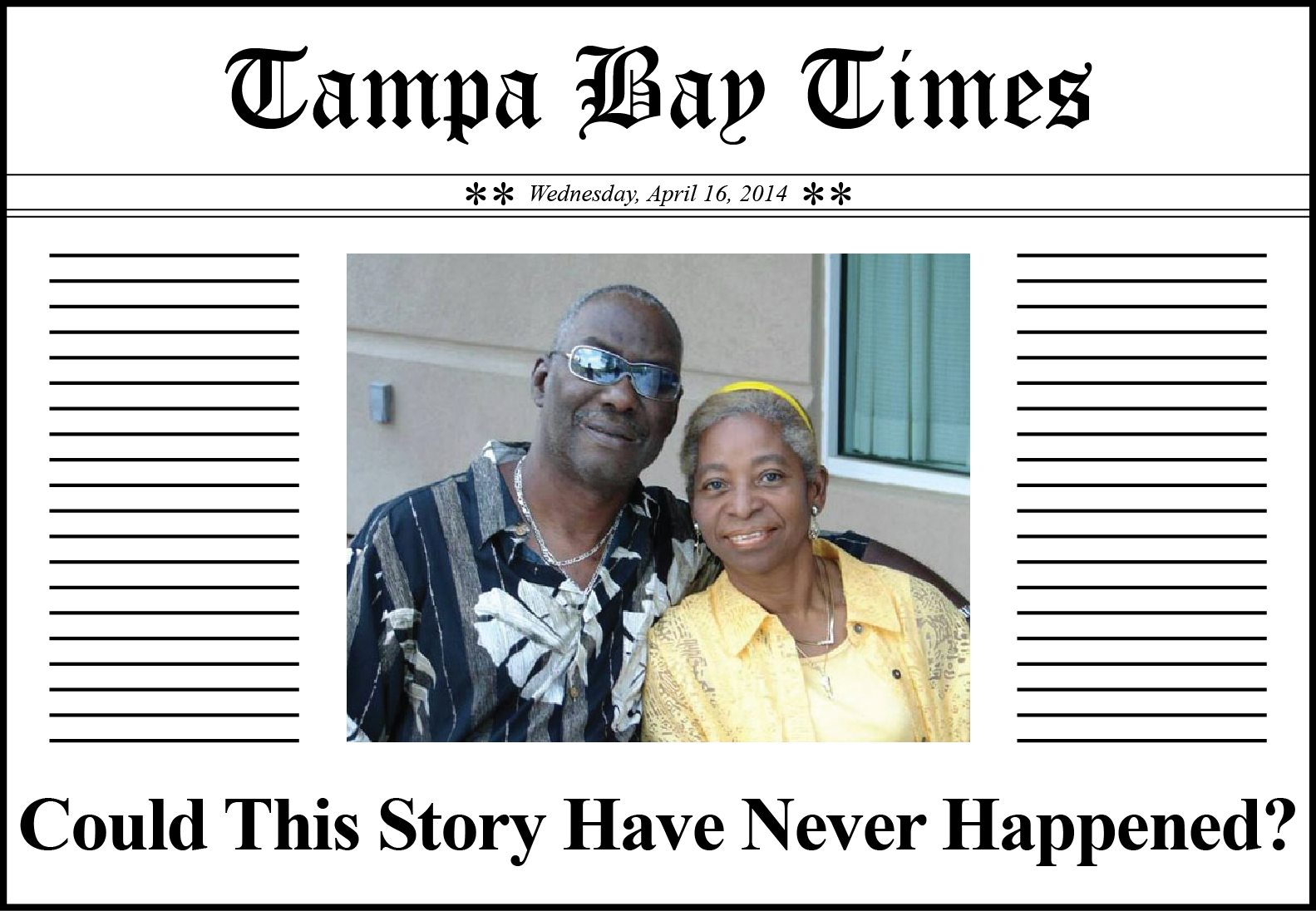
But now onto an interesting article that was recently in the Tampa Bay Times. The headline was “Low blood sugar cited in death of prominent community leader’s husband after Tampa police traffic stop.” If you would like to read the entire article, you can follow this link.

To give you a synopsis of the article, Officer Anthony Portman received calls of an erratic driver who was swerving onto the sidewalk and into a stop sign. When Officer Portman arrived at the scene and asked the driver, Arthur Green Jr. 63, to hand over the keys, Mr. Green became combative. Officer Portman called for backup and then called for Tampa Fire Rescue to send medics. When Cpl. Matt Smith, the backup officer arrived, he indicated that he had seen diabetic incidents before and suspected that this what Mr. Green was having, but because Mr. Green was resistant, the officers restrained him with handcuffs. At that point, Mr. Green stopped breathing. The officers attempted to give Mr. Green CPR but when the Fire Rescue arrived at the scene, Mr. Green had no pulse. He was transported to St. Joseph’s and after 19 minutes of trying to resuscitate Mr. Green, he was pronounced dead. He had a blood sugar of 29.

A few days after receiving the article, Laddie, my fellow blogger, sent me an email and asked what I thought about the incident. Both Laddie and I agreed that we had no idea of what Mr. Green’s diabetes history was. In pulling up whatever information I could about this incident, I do know that Mr. Green was not wearing a medical bracelet. There is no mention in any of the articles that I’ve read that Mr. Green had a CGM so I am assuming that he did not have one. The main issue of most of my blog posts is Medicare and their denial of coverage for the CGM. Mr. Green does not seem to fit in with this since he was 63 years of age and unless he was on Social Security Disability, he obviously wasn’t on Medicare.

Tampa StoryAfter thinking about this situation for a few days, I decided that the broader issue is that this man died because he didn’t have a CGM. Had he had one, he would have been alerted of his falling blood sugar in enough time to make a correction to get his blood sugar elevated. The reason why he didn’t have one isn’t the important part of the story.   It’s the fact that he didn’t have one. It proves the point that the CGM is a lifesaving device and that anyone, whether young or old, on Medicare or not, could be saved from a preventable death with the use of this device.

This could have been my husband. He’s had quite a few incidents where the same thing could have happened to him as happened to Arthur Green Jr. Call it luck or a higher power. My husband has been fortunate enough to have been stopped by officers who recognized immediately that he had a medical problem (he does wear a medical alert bracelet) and notified EMS quickly enough for them to get to the scene and administer glucagon (a hormone that stimulates your liver to release stored glucose into your bloodstream.  It is used as medication to treat someone with diabetes that has become unconscious from a severe insulin reaction). He does not have a CGM presently. This has been what our 1 ½ year long appeal has been about.

Entertainment people always say that any press is good press whether it’s positive or negative. So in this instance, The Tampa Bay Times calling attention to the unnecessary death of Arthur Green Jr., as sad as this death is, calls attention to the fact that this can happen to any diabetic at any time. If only Medicare would be aware of this incident and understand that those people who are asking for coverage for their CGM are not doing it because they want another piece of equipment to attach to their bodies. They just want to assure themselves that they are safe and able to keep others safe as well.

It’s so difficult to understand why Medicare just doesn’t get it.  IF ONLY they did.


UNFAVORABLE

Sue B_Head SquareUNFAVORABLE….a word that I really didn’t expect to see. Eight long months of waiting for a decision and when it finally came, it was UNFAVORABLE.

In June of 2012, my husband Marc, a Type 1 diabetic with hypo and hyperglycemic unawareness, entered the Medicare system. A few months later, his Continuous Glucose Monitor (CGM) malfunctioned and needed replacement. His private insurance had always paid for the CGM and sensors without any question, and it never occurred to us that Medicare wouldn’t pay as well. We were wrong. Soon after his endocrinologist sent in the prescription for a new CGM, we were notified that our supplemental insurance, Highmark Freedom Blue, had denied coverage because under Medicare guidelines, CGM is “precautionary” and not covered. Thus began the long road through the Appeals process.

I have been writing of this journey for the past eight months on this blog site. We went through Levels 1 and 2 rather quickly, but Level 3 with an Administrative Law Judge (ALJ) was frustrating to the point of wanting to pull out our hair. There are approximately fifty-six ALJ’s spread throughout the United States and most of the hearings are by telephone. Our telephone hearing was on June 26, 2013. Prior to that date, we sent the ALJ documentation that included a graph of Marc’s blood sugar over a period of a month and various research articles from experts in CGMS. Also included were our statements explaining how our lives had been before the CGM and how they had improved once Marc had a CGM. And then of course, we described how our lives had reverted back to what it was in the pre-CGM days. We also sent a letter from Marc’s endocrinologist explaining how the CGM works and the importance of Marc having one. More details of this story are outlined in my blogpost “A Crusader for Medicare Coverage of CGM”.

We had our telephone hearing in Marc’s endocrinologist’s office. Marc, his endocrinologist, and I all testified. I wrote about this in my “Dear Judge Smith” post and described the frustration we experienced in the months waiting for the Decision to be made. When I wrote that blogpost, we had already been waiting four months. During the next four months, I periodically called the Judge’s Legal Assistant and practically begged for help. Each time I was told that he was not able to divulge any information, that it was on a first come, first serve basis, and that our decision was in “queue” waiting to be drafted.

On Tuesday, February 25th, after eight very long months of waiting, the decision finally came. I was expecting a FULLY FAVORABLE DECISION. I had seen at least five FULLY FAVORABLE DECISIONS from other people whom I had been in contact with over the past months. Their cases were so similar to my husbands that I thought there could be no other decision. Much to my surprise, when I opened the envelope and pulled out my husband’s decision, it was an UNFAVORABLE one. The Judge stated:

While very sympathetic to the appellant’s medical conditions, the ALJ finds that in accordance with guidelines presented in L11520 and Medicare Advantage Medical Policy Bulletin Number E-15, the plan is not required to preauthorize or cover a continuous glucose blood monitor and accessories, because the device is not covered under Medicare’s rules and regulations or otherwise under the EOC.”

The Judge acknowledged that the “appellant has brittle diabetes, and hypoglycemia and hyperglycemia unawareness. His diabetes is difficult to control and his blood glucose fluctuates widely. He has used a continuous glucose monitor for several years prior to enrolling in Medicare. The appellant’s glucose monitor was covered under his private insurance policy with Highmark Blue Shield prior to enrolling in Medicare”.

I understand his statement. However, I have a copy of a different Judge’s decision in a similar case and his ruling was:

“Policy Article A33614 calls continuous blood glucose monitoring “precautionary. The logic of this Policy Article is flawed in this respect and I decline to follow it”. He then goes on to say that “After all, isn’t all blood glucose testing precautionary whether using a continuous blood glucose monitoring system or glucose meter and test strips—as both methods can only tell you that your blood sugar is too high or too low or normal.” He continues “Still further, while the device could arguably be classified as “precautionary” (at least in those instances where the reading is not hypoglycemic or hyperglycemic) they are no more precautionary than standard blood glucose monitors and test strips that are covered my Medicare”.

Furthermore, this gentleman’s hearing was on October 29, 2013 and the Judge rendered his decision on November 6, 2013, just a week after the hearing…not eight months after the hearing.

Two Judges hearing very similar cases and two different opinions. I guess we got the wrong Judge.

Unfavorable_3We are going to soldier on and are now preparing for Level 4.  We will draft an argument explaining why we disagree with the Judge’s decision and present it to the Medicare Appeals Council (MAC). I don’t know what to expect from this. In my perfect world, they would overturn the Judge’s decision. But I am not so sure there will be a perfect world for this. Still I have hope—-or at least try to have hope.

I hope that you have read my blogpost “Join the Crusade”. If you haven’t already done so, please follow the links in the blog and write your Congressperson to let them know how important a CGM is to the health and safety of any diabetic with hypoglycemia unawareness. We need to show our support for H.R. 3710, the Medicare CGM Coverage Act that was introduced into Congress by Congresswoman Carol-Shea Porter. Also, you can go to https://www.popvox.com/bills/us/113/hr3710 to quickly vote to support this bill. It only takes a few minutes and if you fill in the general information, your Congressperson will be notified of your support.

As I have said repeatedly, this issue is not only important to those on Medicare now, but also to the vast number of people who will be entering Medicare in the future. Believe me, you don’t want to have to go through the frustrations that we have experienced fighting for Medicare coverage of the CGM. It’s 100% exhausting, time consuming and frustrating.

UNFAVORABLE….a word that I really didn’t expect to see.

Join the Crusade

Sue B_Head SquareMedicare guidelines do not provide for coverage of Continuous Glucose MonitorsI am an advocate for my husband who desperately needs a new CGM and previously received CGM coverage under private insurance before reaching age 65. I am a crusader for the entire diabetes community, whether you are on Medicare, will soon be on Medicare, have a Continuous Glucose Monitor presently, or might need one in the future.

In December 2013 Representative Carol Shea-Porter [D-NH1] introduced a bill into Congress, H.R. 3710: Medicare CGM Coverage Act, which provides for coverage of Continuous Glucose Monitoring Systems by Medicare if recommended by a doctor. My recent post Baby Steps talked about the bill and many members of the Diabetes Online Community (DOC) asked how they could become involved in this crusade.

I have just received an email from Congresswoman Shea-Porter’s Legislative Assistant, Marjorie Connolly, and she suggested the following:

  • The most effective step you can take is to ask your own Representative to cosponsor the bill.
  • Call your Congressperson’s DC office and ask for the email address of your Congressperson’s Legislative Assistant for health issues.
  • Email the Legislative Assistant the text of Shea-Porter’s Dear Colleague letter (below) along with a personal note. That way they will understand why the issue is important to you, the constituent, and they will also have the Dear Colleague to show their boss so that he/she will know how to sign on.

The roster of the House of Representatives along with phone numbers is available at http://www.house.gov/representatives/

CGM CrusaderIf you would like to know more about my story and why I am crusading for CGM coverage by Medicare, please read my About Page and some of my previous blog posts.

There are many diabetics such as my husband who never realized that when they went on Medicare, their CGM would no longer be covered. When the denial for coverage comes, and it inevitably will because Medicare considers the CGM a precautionary device, the arduous journey through the Appeals system is daunting, exhausting and psychologically taxing. The wait for a decision is beyond description and we have waited for 8 months. The entire process will only get harder as baby boomers become Medicare-age in greater numbers. We need to do something about this sooner rather than later.

The only way to fight Medicare’s denial of the CGM is to get the guideline changed. The best thing that we can do now is to let our voices be heard and join with Congresswoman Shea-Porter and her new cosponsor, Congressman Matthew Cartwright [D-PA17] in asking Congress to pass H.R. 3710, the Medicare CGM Coverage Act of 2014.

At the bottom of this post you will find clickable links to download a Sample Letter and a copy of Shea-Porter’s Dear Colleague email blast. Don’t delay because the sponsors of this bill have begun their full-on push for support and every voice is important. If you are a blogger and want to know how to help, click to download this document:  Dear Fellow Bloggers_Final

Please contact me if I can assist you in any way. You don’t have to be a person with diabetes to write the letter. You can be the son, daughter, mother, father, friend or as myself, the spouse of a diabetic.

Please do this for all of those who so desperately need a CGM and can’t afford to pay for it out of pocket. Together we can do this.

Thank you.

Please note that due to problems with spam, comments are blocked on Test Guess and Go posts older than 90 days.  If you would like to make a comment or contact Sue from Pennsylvania, click here.


To download, click on this link: Sample Letter to Congress_Final

Sample Letter

To download, click on this link: Dear Colleague_Final

Dear Colleague Email Blast

Baby Steps

Sue B_Head SquareFor months I have been blogging about the roadblocks my husband has faced in getting a CGMS. He used one before going on Medicare, but a replacement system prescribed by his endocrinologist was denied by Medicare. We went through Levels 1, 2, and 3 of the Appeals process and had a hearing with an Administrative Law Judge on June 26, 2013. After being promised a decision in three months, we are  at seven months and still waiting for the judgement to be drafted so that we can find out if we got a “Fully Favorable Decision” or not.

In the meantime, I have been in contact with a Legislative Assistant of Representative Carol Shea-Porter [D-NH1].  In December 2013 Shea-Porter introduced a bill into Congress (H.R. 3710) which provides for coverage of Continuous Glucose Monitoring Systems by Medicare if recommended by a doctor. Unfortunately this bill is being given little chance of passing, but I believe it is an important step in bringing attention to the important issue of CGMS coverage for senior citizens.

I have also been in touch with the Global Marketing Director of Dexcom and she has indicated that together with Medtronic, they are forming a coalition to plan a big legislative push with respect to CGMS and Medicare.

I have been cautioned that it is too early to become excited about a speedy change in Medicare policy. But for me this is exciting news. I have gone from feeling totally alone in my crusade to knowing that a Congresswoman, Dexcom, and Medtronic are taking steps to influence Medicare to change the guideline.  For the many diabetics on Medicare who need a CGMS and can’t afford the cost of the device and sensors (my husband being one of them), there is a glimmer of hope that victory will be achieved now that some of the big-time players are becoming involved in the fight.

Climb the MountainThe steps being taken now are just baby steps and it is still a long way to the top of the mountain. There will come a time when I, together with many others, will need to have our voices heard. We will need a groundswell of support from the Diabetes Online Community to help change Medicare policy to provide for CGMS when medically necessary for senior citizens with diabetes.

Right now we are in the early stages of figuring out how to do this in the most effective way. I urge you to keep reading Test Guess and Go as we update our progress.  Please contact me if you have any information or contacts who will be helpful in pursuing this goal. If you are on Medicare (or will soon be on Medicare) and are concerned about your safety in living with diabetes without a CGMS, please reach out to me to add your name to my growing list of advocates.

Baby steps.  So small, but the first steps on the road to victory.

The Crusade Continues

Sue B_Head Square

As 2013 comes to a close, I can’t help but think about all the ways that I’ve grown this year.

At the start of  the year, I was waiting to hear from the Administrative Law Judge’s office to find out when my husband was going to get a date for his Medicare appeal for his CGMS. Before we actually got the date, I saw a Letter to the Editor in Diabetes Forecast Magazine from Janice Allen in Foresthill, California asking why Medicare would not cover her CGMS. That prompted me to Google her name and attempt to find her address. Fortunately Google is an amazing tool and there is almost nothing that you can’t find on it. I wrote Janice a letter and was pleasantly shocked when she called me within a few days of mailing it. That was the start of my advocacy. After I spoke to her, I decided that something needed to be done to change the Medicare CGM guidelines and if not me, who else? I was really tired of sitting on my hands and taking chances day-by-day with my husband’s life because he didn’t have a working CGMS.

I started surfing around the internet and came upon the American Diabetes Association Forums.  I found a post there from a woman in New York with a reference to CGMS. So I put a comment on the post and that started a wonderful friendship with Sue from New York. We quickly became fast e-mail friends and that translated a short time later into phone friends. Through her, I met Laddie who graciously offered me the opportunity to guest blog on her site. Laddie is one terrific person. Aside from the fact that she’s a gifted writer, she’s a good friend as well. She’s my go-to person for education about diabetes since I am not a diabetic and there is so much that I don’t know about it. She has also helped me tremendously as I navigate the blog world as a regular contributor to Test Guess and Go.

After my first blogpost I started hearing from others who were experiencing the same problem as my husband. They also were denied coverage of the CGMS. All are on Medicare; some are paying for their CGMS out of pocket and others, like my husband are going without. All are suffering in some shape and form because of Medicare’s decision not to pay for the CGMS.

Recently I was fortunate to connect with a Massachusetts woman, Carol Lewis, who shared the information that on December 11, 2013, Congresswoman Carol Shea-Porter of New Hampshire introduced a bill into Congress addressing the problem of CGM coverage by Medicare:   H.R. 3710: Medicare CGM Coverage Act – to amend title XVIII of the Social Security Act to provide for coverage of continuous glucose monitoring systems (CGMS) as durable medical equipment under Medicare, and for other purposes.  In this bill, CGMS coverage will include a transmitter, receiver, sensors, and test strips required for use. This is the first time, to my knowledge, that anyone in either Congress or the Senate has attempted to do anything about CGMS coverage. In early 2014 I will be posting more information about this bill and asking everyone to contact their Congressperson to request that they support this bill.

I have always shied away from calling attention to myself, but over the past year I have found that this is no longer possible. I have a husband who has a specific need and that need is a CGMS which for him is lifesaving. I can’t sit around and watch while he goes day in and day out without one. I also can’t sit around and watch anyone in the future who might need a CGMS go through the same process that we have been going through. It’s long and arduous and there have been many times when I’ve felt like throwing up my hands and packing it in. But each time I’ve felt this way, someone has been there to encourage me to continue.

New Year Crusade

I say that it’s my year of growth simply because along the way, I have learned so much about diabetes. I know that I have much more to learn. Along the way, I have met many people who have now become a part of my life. I have blogged. I have developed a relationship with Jim Bock of Diabetes Forecast. He has been a great source of help in having our story told in the magazine in the December 2013 issue. And recently I have developed a relationship with Congresswoman Shea-Porter’s legal assistant as well as Amy Wotring of the American Diabetes Association.

I thank each and everyone who has read my blogs and responded with a comment. I thank Sue and Laddie who have been an integral part of my journey. Most of all I thank my husband Marc who has been my life partner for the past 44 years and who is the reason why this is so important to me. I hope someday in the near future that Marc will open our front door to find a box containing a brand new CGMS that has been paid for by Medicare.

To everyone, I wish you a Happy and Healthy New Year.  You will be hearing more from me in 2014.

THIS POST IS MY DECEMBER ENTRY IN THE DSMA BLOG CARNIVAL.  IF YOU’D LIKE TO PARTICIPATE TOO, YOU CAN GET ALL OF THE INFORMATION AT HTTP://DIABETESCAF.ORG/2013/12/DECEMBER-DSMA-BLOG-CARNIVAL-3/‎

*

My Eight Days of Chanukah Wish List

Sue B_Head Square1.   I wish that frying potato latkes wouldn’t mess up my entire kitchen. The oil gets all over everything and grating potatoes is a hard thing to do.

2.   I wish that I lived part time in Atlanta so that I could see my two children, my son-in-law and granddaughter more often.

3.  I wish that in my retirement years I didn’t have to spend so much time trying to fight Medicare for a CGM for my husband.

Menorah4.  I wish I could be a kid again for the 8 days of Chanukah so that I would get 8 gifts, one each night.

5.  I wish that Laddie, Sue from New York and myself could sit down together and have a cup of coffee.

6.  I wish I could eat anything that my heart desired and not gain any weight.

7.  I wish that I could tweak my nose and have my house magically get cleaned.

8.  Most of all, I wish the decision from our Administrative Law Judge would get here. Waiting for over five months…and still waiting…is way too long.

The Dash

Sue B_Head SquareRecently a friend was recalling a visit to the grave of his father-in-law.  As he was looking at the headstone and saw the date of birth and date of death, he focused on the dash (-) between the two dates. It got him thinking about what went on in his father-in-law’s life in the space where that dash was. It also got him thinking about what he had done in his life that will one day be the dash on his headstone. This person happens to be an extremely generous person with his time, his wisdom, his philanthropic endeavors and is truly someone whom I would love to model my life after. He is fortunate to have a wife who shares the same wonderful qualities that define him. They both know that the dash will be full of everything great that they’ve done in their lives.

When I think of my own mortality (and hopefully that won’t be for a long, long time), I think about my dash. I have always been a very private person; not one given to making speeches or calling attention to myself. Over the past months, I have turned into an advocate for my husband’s diabetes management, especially with reference to his Continuous Glucose Monitor (CGM). I have blogged which is something that I had never envisioned myself doing. I have also been trying to aid whomever needs my help in navigating the Medicare Appeals process for CGM coverage and I have even been interviewed by Diabetes Forecast Magazine about our Appeal process in trying to get my husband a CGM. This interview will be a sidebar to an article being published about Medicare in the December issue of the magazine. Everything that I have been doing is in contrast to the way I lived my life before. I decided that someone needed to do something about the CGM guideline and so be it if that someone needs to be me.

Recently I was with these two friends at a joyous but sad going away party. They are moving from our close community in Harrisburg, PA to Northern New Jersey to be closer to their family. His parting words to everyone at the party were “Don’t forget the Dash”. Those words will now stick with me daily and I will continue to try to fill in my dash and fight as hard as I can to get the Medicare guidelines on CGMs changed.Dash Headstone