November!

Laddie_Head SquareNovember is a month of change in Minnesota. We move from the somewhat warm days of late October to cold wintry weather by the end of the month. 

It is also a busy month for me when it comes to diabetes. 1) It is Diabetes Awareness Month with special events and increased advocacy. 2) JDRF sponsors a TypeOneNation Summit in the Minneapolis area. 3) My diaversary is in November. 4) The Big Blue Test is in full swing and World Diabetes Day is coming soon.

Below you’ll find some outdoor photos that scream “November!”

IMG_1743I have been raking for a few weeks now, but one maple tree refuses to shed its leaves. Our last leaf pick-up is Friday and I am hoping that these leaves will drop before then. If that doesn’t happen, my fingers are crossed that strong winds next week will blow the delinquent leaves into my neighbor’s yard….

*

IMG_1723The signage at Hyland Lake Park Reserve where Abby the Black Lab and I walk several times a week has changed in anticipation of winter. The trail labeled for dog walkers, bikers, and rollerbladers in the summer is now marked for dog walkers and snowshoers.

*

*

IMG_1724Although I shudder at the idea of snow, we have already seen flurries this fall. Once it gets colder, the snowmaking machines in Hyland Park will start blowing snow for the nearby cross-country ski trail. Although I live in the suburbs, I can see downhill and cross-country ski trails from my house. Just barely out of sight is a 70-meter ski jump. And you wonder why I spend my winters in Arizona!

*

IMG_1745An apple on the ground and you question why I am showing you my garbage. My neighbors have apple and crabapple trees and fruit litters my backyard. The fruit-eating animals I have seen in the last week include coyotes, birds, deer, squirrels, and Abby the Black Lab. Who left the half-eaten apple? Probably Abby who really prefers deer poop. Yeah, we’ve got piles of that in the yard also.

*

Below you’ll find some November photos that scream “Diabetes!”

IMG_0533Diabetes social media has been saturated this month with blue photos as part of the JDRF T1D Looks Like Me campaign. I have a long history of hiding my diabetes, but thanks to my years in the DOC, I proudly share my photo.

*

*

TypeOneNationLogoSaturday was the JDRF TypeOneNation Summit for the Minneapolis area. Author and CDE Gary Scheiner (Think Like a Pancreas) shared his wealth of knowledge in both the keynote talk and a session about interpreting CGM data. I also attended a talk by the incredible Jay Hewitt. Jay is an Ironman triathlete who was a member of the U.S. National Triathlon Team and raced with Type 1 diabetes.

*

Don’t forget the Big Blue Test.

bbt-logo

Remember to follow the hashtag #WDDchat15 on Saturday, Nov. 14 to participate in the World Diabetes Day #DSMA TweetChat. The schedule can be found here, but stay tuned to @DiabetesSocMed on Twitter for updates.

WDDCHAT2015

**********

And finally, today marks 39 years since I was diagnosed with diabetes in 1976.

Diaversary39

Balance

Laddie_Head SquareI wrote today’s post a year ago as part of D-Quote, an initiative created by Cynthia Zuber of Diabetes Light | My holistic journey to health. The purpose of her project was to give voice to members of the diabetes community and to increase advocacy and outreach during November Diabetes Awareness Month.

My diabetes quote is:

A well-developed sense of humor is the pole that adds balance to your steps as you walk the tightrope of life. William Arthur Ward

Type 1 Diabetes is the result of an autoimmune attack on our beta cells.  We can talk about the many manifestations of that attack with mention of missing hormones (insulin and amylin) and malfunctioning GLP-1 (glucagon-like peptide-1). Or we can simplify the discussion and say that our bodies lack equilibrium. Our bodies lack balance.

Those of us with Type 1 try to manipulate insulin, food, exercise, stress, etc. in an attempt to balance our blood glucose. Too much insulin, we go low. Too many carbs, we go high. What is too much today might be too little tomorrow. Unable to quantify many of the things that affect our BG, we walk on a tightrope and do our best not to fall off despite our many wobbles. At the same time we try to find a balance for how diabetes fits into our lives. We search for the happy medium between managing our diabetes so that we can live our lives and living our lives just to manage our diabetes.

Tightrope Walker

We can never be perfect with diabetes and sometimes the only thing we can do is laugh at our imperfect attempts at perfection. Sometimes a sense of humor is the best way to get through the day. The best way to put diabetes into perspective. The best way to make sense of our lives.

Check It Out!

Laddie_Head SquareIt’s been a while since I’ve shared what I am reading and listening to. In the past couple of days I read one blogpost and listened to two podcast episodes that I think are worth your attention.

At the top of my bookmarks for non-diabetes blogs is a website titled Heart Sisters. This blog is self-described as “All about women and heart disease – our #1 killer – from the unique perspective of CAROLYN THOMAS, a Mayo Clinic-trained women’s health advocate, heart attack survivor, blogger, speaker.”

Currently I do not have heart disease although as a woman in her 60’s with Type 1 diabetes, I know that I am at risk. The appeal of this website for me has less to do with heart disease and more to do with the shared experiences of women (really all people) living with a chronic disease.

On October 17, Thomas published a blogpost titled “How Minimally Disruptive Medicine is happily disrupting health care.” She highlights the Mayo Clinic’s KER (Knowledge & Education Research) team led by Dr. Victor Montori. Dr. Montori is well-known for his discussions of the chronically-ill patient’s “burden of treatment” and is a proponent of eliminating terms such as “non-compliant” and “non-adherent.”

Heart Sisters 1

Those of us with diabetes are experts at recognizing the burden that our care places on our lives. Thomas shares a quote from a 46-year old woman (V. T. Tran interview) whose comments will hit home for many of us:

“There is stuff that I am SUPPOSED to do, and stuff that I actually DO.  If I did everything I am SUPPOSED to do, my life would revolve around doctors and tests and such and there wouldn’t be very much left for living my life.

I strongly urge you to read this blogpost and dream about an ideal world where medical professionals no longer blame patients and instead work towards patient health goals with a secondary emphasis on diagnostic test numbers.

***********************

Juicebox Podcast is an offshoot of the well-known diabetes parenting blog Arden’s Day. In 2007 Scott Benner began sharing life stories after his daughter Arden was diagnosed with Type 1 diabetes at age 2. Scott proudly proclaims that he is a stay-at-home dad and the author of Life Is Short, Laundry Is Eternal: Confessions of a Stay-At-Home Dad. Never one to shy away from a challenge, Benner began a podcast in early 2015 and named it after the numerous juiceboxes his daughter has consumed to treat low blood sugars.

This weekend while walking the dog, I listened to two Juicebox Podcast episodes which focused on Dexcom. Episode #27 was an interview with Kevin Sayer who is the CEO of Dexcom. Rather than recreate the wheel, I’ll share Scott’s synopsis of the episode: “Dexcom CEO Kevin Sayer talks about the Dexcom/Google collaboration, pump integration, Android and iOS/CGM in the Cloud issues, Medicare, Medicaid, Adhesive concerns…. Sayer was an open book who dished about things that I thought for sure he’d decline to speak about.”

Episode #28 was an interview with Steve Pacelli who is Dexcom’s Executive VP of Strategy & Corporate Development. Once again per Benner: “Just 24 hours after the surprise FDA approval of the Dexcom G5 continuous glucose monitoring system, I spoke with Dexcom EVP Steven Pacelli and asked him all of the questions that were submitted to me by my blog readers and podcast listeners – I even threw in a few of my own. If you’re wondering about Dexcom G5 upgrading, cost, out of pocket, battery life and more?”

Juicebox Podcast 1

Both of these Dexcom interviews were released in August and some of the G5 discussion is a bit dated. A minor point because both conversations are fascinating with insider views of Dexcom’s past, present, and future. I found Sayer’s discussion of the Google/Dexcom collaboration to be particularly interesting with his views on device miniaturization and the possibilities for the Type 2 market.

As an adult with Type 1 diabetes, I am not necessarily the Juicebox Podcast‘s target audience—parents of children with T1. Some of Benner’s interviews focus on parenting issues such as 504 plans/talking with school administrators and I skip those. Many are interviews with other T1 parents sharing their unique stories. I listen to and enjoy those podcasts while giving thanks that I live with Type 1 rather than my children. Finally there are interviews with people such as NASCAR driver Ryan Reed, American Idol contestant Adam Lasher, John Costik of Nightscout, and the two Dexcom executives that are interesting to anyone with a connection to diabetes.

I subscribe to the Jukebox Podcast through iTunes and new episodes are automatically downloaded to my iPhone podcast app. You can also listen to individual episodes through iTunes.

***********************

Summary:

Read this!  How Minimally Disruptive Medicine is happily disrupting health care

Listen to this!  Dexcom CEO Kevin Sayer Talks

Listen to this!  Dexcom G5 Approval with Dexcom EVP Steve Pacelli

Cracked Again

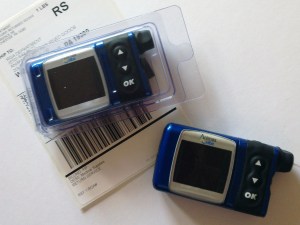
Laddie_Head SquareI just received a replacement Animas Vibe pump. At my last battery change, I discovered a crack in my pump from the top of the battery compartment down about 5/8 inch. Did I over-tighten the battery cap? I have no idea. Is it a design flaw or weakness in the type of plastic used for the pump case? Maybe. I would label it as an isolated problem but less than a year ago, I had my Animas Ping replaced for the same problem.

Animas Vibe Pumps2

In the seven years that I used Medtronic pumps, I cracked at least 3 pumps (maybe 4?). All of the cracks were in the exact same location: from the reservoir view window to the Esc button.Medtronic Pump Cracks

Maybe I am a kid who is rough with my pumps and break them whenever I wrestle and beat up my older sister. Nope. Maybe I get frustrated with diabetes and throw my pumps against cement walls whenever my BG tops 300. Nope. Maybe I have unlimited money and don’t take care of my diabetes devices. Nope.

So what is the truth? I am a middle-aged woman who will soon be called “old.” I line up my diabetes supplies in LIFO (last in, first out) order and never once in 39 years have I ever run out of supplies. I am not perfect at the diabetes game but I do a pretty good job. If nothing else, I am definitely mega-organized, methodical, and careful.

So what is the story?

After cracking the 3rd (or was it the 4th?) Medtronic pump, I spoke with a phone representative who told me that they would not replace any more pumps for me. Huh???  I called back a few days later and got a rep who asked how I was carrying my pump. I was using the Medtronic clip attached to my waistband as I had been ever since I started pumping. She suggested that after they replaced this pump that I should quit using the clip. She arranged for a free leather case (brown and ultra-masculine) which I hated. But from that day forward, I abandoned the Medtronic clip and began carrying the pump in my pocket. Never again did I crack a Medtronic pump. For whatever reason, the Medtronic clip on my waistband caused pumps to crack. For me. Obviously not for everyone. Medtronic pumps still ship with the same clip that for whatever reason didn’t work for me.

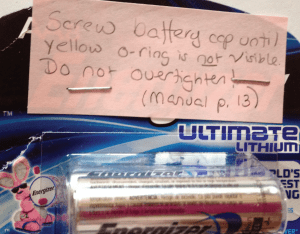
When I first started using the Animas Ping I got a few “No Delivery” (Loss of Prime???) error messages. It turned out that when I inserted the reservoir, I wasn’t pushing it in far enough or tightening the reservoir cap tight enough. With Medtronic I was always advised not to tighten things too tight. Whatever. I quickly learned to push Animas reservoirs in as far as I could and tighten the cap tightly. I have never had a reservoir error since then. So now I am cracking the pumps when I insert batteries. Am I over tightening them? I have no idea. But from now on, I will follow the Animas manual exactly as the photo below shows.Battery Insructions

So here I am. A middle-aged woman who has cracked 5 pumps in ten years of pumping. What happens with kids and teenagers who are rough with pumps? What happens with athletes who play football, hockey, and soccer? What happens with people whose pumps are randomly snatched by ceiling fans (Scott Johnson)? Although I hate to jinx myself, I have never had a pump failure. Just cracked cases. Except for the one rogue Medtronic rep, the pump companies have been fabulous in sending me new pumps as soon as possible.

So what’s the story? Is my experience mirrored by others on insulin pumps or am I just one rough, tough lady?

Beats me. As far as I am concerned, It’s just another day in a life with diabetes.

TuDiabetes: Type 2 Series

type2FB

Laddie_Head SquareToday (Thursday, October 1) TuDiabetes is launching a series of live interviews that are centered around Type 2 diabetes. Does that mean that those of us with Type 1 diabetes won’t learn anything? Absolutely not! All of these interviews will have relevance for anyone affected by any kind of diabetes—whether you have diabetes or love someone who does. This series will address topics such as diet, the basics of Type 2 diabetes, diabetes myths, emotional support, shame and blame, and family dynamics.

Today’s event is an interview with journalist and author Gary Taubes. Two of his well-known books are Good Calories, Bad Calories and Why We Get Fat. I have mentioned Taubes more than once on my blog and I highly recommend that you check out his books and/or articles. His writing is clear, concise, and highly persuasive as he argues that ourtaubesFB current obesity crisis is caused by certain types of carbohydrates rather than fats and excess calories. When you read his stuff, it really makes sense.

Today’s interview of Taubes is at 1pm PT, 4pm ET, 9pm GMT. To get more details about the event, click here. This event page provides information about Taubes and links to some of his books and articles. In addition there is a teal-colored box to click at the time of the event.

Please note that you must be logged into the TuDiabetes site to view the interview live. At the top of both the event page and the TuDiabetes home page are boxes to click to Log In or Register if you are new to TuDiabetes.

If you are unable to attend the event live today, the video will be posted in the TuDiabetes video archives in about a week.

Mark Your Calendars!

The schedule and details for the other interviews in the Type 2 Series can be found here. The speakers and dates are listed below. All of the event times are 1pm PT, 4pm ET, 9pm GMT unless noted otherwise.

Today, October 1    Live Interview with Journalist and Author Gary Taubes    Details here.

October 7    Addressing Shame and Blame with Susan Guzman    Details here.

October 13    Ansley Dalbo presents “Diabetes What to Know”    Details here.

October 22    D-blogger Mike Durbin, in Conversation with Rick Phillips    Details here.

November 11    Susan Guzman, “Rebranding Diabetes”    Details here.

November 18    Corinna Cornejo on Type 2 Diabetes Myths and Misconceptions    Details here. This event is at 12pm PT, 3pm ET, 8pm GMT.

More about TuDiabetes

TuDiabetes.org labels itself as “a community of people touched by diabetes, a program of the Diabetes Hands Foundation.” On this website you will find information about all types of diabetes, forums where you can touch base with other people affected by diabetes, a live chat feature, an extensive library of video interviews, and a blog feature which is under construction but currently lists links to member blogs.

If you have never checked out TuDiabetes, come visit. You can browse the site without logging in, but it is hoped that you will register and share your voice. If you used to participate and are flummoxed by the new platform, it’s getting busier, more organized, and you are missed. If you live with diabetes, TuDiabetes will make sure that you are never alone.

Introducing Elle and Coach

Laddie_Head SquareElle & Coach by Stefany Shaheen is the story of Shaheen’s oldest daughter Elle (pronounced “Ellie”) who was diagnosed with Type 1 diabetes at the age of 8. This book was recently published in August and I am pleased to have been given a complimentary copy along with the opportunity to share my views of the book. As always, the opinions expressed are my own.

Both the front and back covers of Elle & Coach show a lovely young women along with a handsome yellow labrador retriever. The title of the book mentions “Coach” and the subtitle is “Diabetes, the Fight for My Daughter’s Life, and the Dog Who Changed Everything.” So why doesn’t THE DOG make an appearance until halfway through the book?!?!

The answer to that question is why Elle & Coach is an educational, and inspiring book. For those of us in the diabetes community, the story of Elle’s Type 1 diagnosis is a familiar one with injections, fingersticks, hospital/doctor visits, and wild swings in blood sugar. We have lived with the unrelenting fear, stress, and blame. Through the early chapters of the book Shaheen does a good job of describing the physical and emotional impact of a Type 1 diabetes diagnosis on a child, the parents, and the entire family. We know the story.

If you have difficulty explaining to your relatives and friends the impact of diabetes on your life and that of your family, hand them this book. The story (and of course the beautiful dog!) is compelling enough to keep outsiders reading. They will learn the basics of Type 1 diabetes, the unending daily tasks required, the longterm impact of the disease, the role of technology, ShaheenELLE&COACH(HC)the eternal hope for a cure, and the importance of advocacy at both a local and national level. Admittedly a Type-A mother, Shaheen is not a whiner and she has spent the last eight years working to help people and families impacted by diabetes and other chronic conditions. Similarly, Elle has been a diabetes advocate from a young age and has shared her story with people from community leaders to the President of the United States.

Now enter THE DOG!  Elle and Shaheen learned about Diabetic Alert Dogs (DAD’s) at the 2011 JDRF Children’s Congress where they were witnesses to a young girl and her DAD in action. Initially Elle was not interested in a companion dog, but her mother was inspired to begin researching the use of medic-alert dogs with diabetes. The rest is history as Coach and Elle became a team in the spring of 2013.

The second half of the book describes the magical ability of certain dogs to sense blood sugar changes in humans and the journey of the Shaheen family to obtain a diabetic alert dog for Elle. The beginning of Elle and Coach’s partnership is fascinating and heart-warming. Right away Coach alerted properly to Elle’s out-of-range blood sugars and very quickly began easing the burden of diabetes on the entire family. There were a few bumps in the road and these occurred because although the dog was superbly trained, his humans had a lot of learn!

If you are interested in a diabetic alert dog, Elle & Coach is a good starting point to learn about how to obtain a DAD and some of the adjustments required to fit such a dog into your world. Shaheen wisely emphasizes the need to do your homework to determine if an alert dog is appropriate for you and the responsibilities of living with such a dog. Expense, public access issues, the need for ongoing training, and the 24/7/365 nature of the handler/dog relationship are some of the topics addressed.

I wore many hats as I read this book. I have Type 1 diabetes and know the intimate details of living with this challenging condition. I am a mother and grandmother who gives daily thanks that none of my children and grandchildren have been diagnosed with diabetes. Elle & Coach reinforces my belief that most of the time it is easier being the person with diabetes as opposed to the parents and people who love us:-)  I am a dog-lover and the owner of Abby the Black Lab who at age 9 does not react to my blood sugars but might have been trainable at a younger age. In summary, all of my D-roles enjoyed this book and think that you should find a spot in your diabetes library for this story.

*****

Elle & Coach is available in hardcover, e-book, and audiobook and is available at major booksellers. Click here for more details.

*****

If you’d like to follow Elle and Coach online:

www.elleandcoach.com  |  @elleandcoach  |  www.facebook.com/ElleandCoach

*****

If you’d like to read more blogposts about diabetes alert dogs, check out:

https://testguessandgo.com/2014/07/10/ann-wallen/

http://blackdogsrule.com

http://tarraandduchess.blogspot.com

Considering the Dexcom G5 Upgrade

Laddie_Head SquareFor the first time in my diabetes tech history, I am in the golden upgrade zone. The FDA approval of the Dexcom G5™ Mobile CGM System was announced the same week that my G4 warranty expired. According to Dexcom’s upgrade program, I am entitled to a free upgrade to the G5 system if I purchased my G4 Platinum System with Share before the G5 begins shipping.

It was a no-brainer to order my new G4 system as soon as possible because I never want to run the risk of out-of-warranty equipment failing. Due to good insurance and the CGM rep at Edgepark (yes, I always have great service from Edgepark unlike so many others who report horror stories), my new CGM arrived within a week. At this point I began doing my homework about the upgrade options.

As I learned more about the G5 system, it quickly became apparent that it was not a slam-dunk decision to upgrade. I’ll discuss a few of my concerns below.

Pros of Upgrading

One Less Device:  I joke about diabetic pants and never buy clothes without pockets. I currently carry an insulin pump, glucose tabs, Fitbit, Dexcom receiver, occasionally car keys, and often my phone. The possibility of eliminating the Dex receiver is appealing.

Optional Receiver:  If I don’t like using my iPhone as my receiver, I can always use the G4 Share receiver updated with the G5 software.

Sunlight:  The G4 receiver with its black background is difficult to read in bright sunlight and the red color used for lows is almost invisible. My Animas Vibe pump is even worse and the text is totally unreadable in bright light. My phone has a better display and is easy to see in all light conditions. (Note: Now that I have the Share receiver, I have the option of using my phone without upgrading to the G5, but I would have to carry the receiver.) Because the G5 software upgrade will result in a new receiver display with a white background, maybe it will be easier to read in the sun than the current G4 device.

“Free” G4 transmitter:  Because my current G4 system is working, I have not had to Golden Upgradeopen the new G4 transmitter. I do not have to return this transmitter when I get the G5 transmitters and can keep it as a back-up to use with my current non-Share receiver. This is appealing as I get close to Medicare with no coverage for CGMS.

The Price is Right:  The upgrade is free!

Cons of Upgrading

Expiration of G5 transmitters:  My understanding is that the G5 transmitters will last 3 months and drop dead after 108 days (90 days plus an 18-day grace period). If you have good insurance coverage for CGMS, this is not a big deal. With no CGM coverage, the loss of an extended life for a transmitter can be a big deal.

Bigger Transmitter:  The G5 transmitter has built-in Bluetooth and is bigger than the current slim G4 receiver. It is about the size of the first generation G4 transmitter.

Not Compatible with Animas Vibe:  Although I rarely use my Vibe as a Dex receiver, I like having the option especially when I want a waterproof receiver at the pool or beach. Because Dex transmitters cannot be turned off, it’s expensive to use a G4 and G5 transmitter concurrently. I assume the lack of G5 compatibly will also extend to the new Tandem t:slim G4 combo.

Disadvantages of Phone Receiver:  My phone is much larger than the Dex receiver and doesn’t fit into many of my pockets. Although I use my phone a lot, I do not keep it with me day and night. I have no idea whether the sounds and vibrations of CGM alarms on the phone will be adequate. It will take more button pushes to access BG data on my phone compared to the one-button push of the Dex receiver.

Other Thoughts

Medicare:  I currently have excellent CGM coverage with private insurance. When I move to Medicare in April 2017, I will have to self-fund a CGM unless Medicare regulations change. My guess is that a G4 transmitter with the Animas Vibe or the Tandem t:slim G4 will be the least expensive option because no other receiver is required. As discussed in my April 2015 review of the Vibe, I am not a fan of the Dexcom integration into the Vibe. But it works and is an option. As far as I know, both pumps will continue to use the outdated G4 software instead of the 505 update.

It is possible that under Medicare the G5 will be an equally cost-effective device if I do not need to purchase a new receiver every year. The G5 was approved by the FDA with the requirement that a receiver be provided to new patients. Is that a one-time requirement or will G5 users be required to purchase a new receiver every year when the old one (maybe unused) goes out of warranty?

Staying Current:  New CGM devices are gaining FDA approval at a much faster pace than in the past. It is likely that both the G4 and G5 will be outdated in a few years and maybe my current decision is just not a big deal. With the Animas Vibe and t:slim G4 tied to the G4, my guess is that the original G4 transmitter will be available for many years to come. The G5 may be a short-lived device on the way to the G6 which promises improved accuracy and reliability along with mobile capabilities. Another consideration is what the new Dexcom/Google collaboration will bring to the table.

Decision Deadline:  The Dexcom website indicates that “Upgrade offers are available until 60 days after the first G5 Mobile shipment.” However, I learned that because I purchased my G4 Share system through a distributor (Edgepark), I have only 30 days from the date of shipment to upgrade. I am looking at an upgrade deadline of early October rather than late November. Good thing I asked!

My Decision

I have decided to upgrade and will be sent my G5 transmitters in October. At this point I will upgrade my Share receiver to the G5 software. For the most part I am choosing to abandon my Animas Vibe as a receiver and become more hip by never again being separated from my phone. Frankly I don’t know whether this is the right or wrong decision or if it even matters. Dexcom is making the change incredibly easy and I have just decided to go with the newest kid on the block. If nothing else, I am thankful for having the #firstworldproblem of choosing which CGM system to use. I promise to let you know how it goes.

The Dexcom in Poetry

Laddie_Head Square

You are probably familiar with the poem “There was a Little Girl” by Henry Wadsworth Longfellow (1807-1882). The first verse goes as follows:

THERE was a little girl,

And she had a little curl

  Right in the middle of her forehead.

When she was good

She was very, very good,

And when she was bad she was horrid.

*

When I started this post, my aim was to compare my Dexcom G4 CGM to the little girl. I am a huge fan of my CGM and most of the time it is a trustworthy and reliable device. But occasionally it shrieks, spews out bad results, and stomps its little sensor feet just to remind me that it is imperfect and I shouldn’t expect constant excellence.

Screaming Girl

The more I looked at this photo, the more I began to realize that I was seeing my own reflection rather than my Dexcom. I can be very good at making optimal decisions when it comes to things like diet, exercise, and insulin. The “Good Me” takes the normal ups and downs of Type 1 in stride and spends a lot of time in range. Unfortunately the “Horrid Me” takes over at other times and makes bad decisions amidst frustration, self-criticism, and just not giving a damn. I feel helpless with my BG numbers and want to scream, throw things, and live a self-destructive life eating chocolate-covered donuts.

Dexcom: The Very Good:  In mid-August I had severe bronchitis and was prescribed oral steroids. As is typical with steroids, I experienced a huge rise in blood sugars and at one point was taking 5 (!) times my pre-steroid dose of insulin. Although I wasn’t seeing low blood sugars, I was worried about sleeping with such massive amounts of insulin on board. Adding to my vulnerability was the fact that my husband was out of the country on a business trip.

During the five days of steroids, my Dex G4 was as accurate as I have ever experienced as it tracked my blood sugars in a range from below 100 to the high 400’s. Most importantly it provided a safety net that if my BG tanked at night, it would repeatedly alarm until I responded. Without the CGM, I would have been terrified to be alone and probably would have needed to set hourly alarms to check my BG day and night.

Dexcom: The Very Bad:  Ten days ago I started a new sensor. I know that the first 24 hours of any sensor can be wonky, but this sensor site was the worst. Double up arrows in the high 200’s followed by double down arrows in the 40’s when my calibrated BG was between 100 and 125. Vibrations and alarms were driving me crazy. I finally turned off the receiver to give it a few hours to think about how it could improve. When I turned it back on, I continued to receive multiple alerts—some accurate and others absolutely unwarranted. Rather than throw the receiver out the window, I finally just turned off all of the alerts except for the low threshold. Eventually the sensor settled into reasonably good results.

Besides the occasional bad results of a new sensor, another thing that drives me crazy about the G4 is that after alerting me to a low, it continues to alarm long after my BG has returned to normal. Unfortunately that is a characteristic of the interstitial fluid that the CGM measures and I am not sure that there is a solution for this. But it would be nice if the G4 didn’t alert for a low when your BG is moving up:-)

Living with a Dexcom: The Good Me and the Bad Me:  Most of the time I live in harmony with my Dexcom. I do a good job of knowing when to trust it and how to optimally use the information it provides. One thing that I sometimes ignore is that the CGM is only as good as how I react to it. If things are rough in my diabetes life, I have the power to evaluate how I am using my CGM and make changes if necessary.

A lot of my recent frustrations with the Dex are related to alarm fatigue and data overload. There is not much that I can do to prevent a lousy sensor start or change the fact that interstitial fluid behaves differently than blood sugar. The Bad Me overreacts to sensor data and gets stressed by out-of-range BG numbers. I start making too many corrections that often lead to more erratic numbers. I start dismissing alerts without even looking at the receiver. I rage bolus to prevent highs. I eat junk food despite the inevitable cr*p results. I basically get burned out by diabetes.

The Good Me remembers that I am in charge of most of the settings on my CGM. After turning off most of the alerts last week, I lived with only the low alert of 70 for several days. I was amazed at how much less stress I experienced in relation to diabetes. I slept better and in general had improved BG numbers per my meter. I eventually turned back on the high alert, but at a threshold of 200 rather than 150. I didn’t change my personal goals for my BG range; I just reduced the Dexcom intrusions into my life. I look at my CGM often enough that except for the protection from undetected lows, maybe I am better off catching the changes myself rather than getting constant alarms for ups and downs. I have kept the rise and fall rate alerts turned off and have not missed them.

Summary:  If you have followed my blog for a while, you know that I was diagnosed long before home BG monitoring, insulin pumps, and even multiple daily injections. On one hand I work hard to have access to the latest and greatest technology. There is no doubt that my life with diabetes has been enhanced with the use of a pump and a CGM. At the same time I need to remember that beeps, bells, and whistles don’t guarantee good blood glucose numbers or mental health.

Currently I have turned off many of the Dexcom alarms and that is working for me. There is no guarantee that this will work for next week or next month. There is certainly no guarantee that it will work for you. But the only way to make things better when diabetes seems to be winning the battle is to try something new. Good or bad, it’s worth a try.

Please note that as I got this post ready to publish, my new Dexcom sensor alerted to a BG of 53. Two meter tests  of 100 and 106 confirmed my BG to be in range. Argh!!!

Pollyanna Faces Diabetes

Laddie_Head SquareI have been accused of being “Pollyanna” when it comes to diabetes. I rarely complain about my dysfunctional pancreas and I am a firm believer that I only get one chance at life and I am not going to waste my time complaining. But sometimes I have to admit that DIABETES IS HARD.

I golf once or twice a week during my summers in Minnesota. Most of the time I play right after breakfast in the relative coolness of the morning. My home course is hilly and I am always tired when I finish my 18-hole walk with my clubs on a pushcart. Because I am in a rut and usually play the same course at the same time of day, I have for the most part figured out how to manage diabetes. Does that mean I never have lows or highs? Absolutely not. If my blood sugar is within a reasonable range before beginning play, does this mean I can get through a round without eating a couple of glucose tabs and maybe having a small snack? Nope, can’t do that either. But by planning my breakfast food and bolus insulin, using temporary basals, relying on my Dexcom CGM and an occasional fingerstick, I can play 18 holes with only minor blood sugar annoyances.

My standards for “diabetes success” on the golf course are low. Success means finishing the round without keeling over, needing paramedics, or getting so low that I can’t read the scorecard. Success means that my errant shots are the result of bad swings not the inability to control arms and legs wobbly from a hypo. Success means racking up lots of steps for the current Fitbit challenge. Success means that I enjoy my round and my playing partners don’t have to ask me if I am okay. Success means occasionally forgetting about diabetes.

On Labor Day my son invited my husband and me to join him for 18 holes of golf at his home course. He plays at Hazeltine National Golf Club which is near his home in a western suburb of Minneapolis. Hazeltine is a championship venue which has hosted events such as the U.S. Open and the PGA Championship and will be the site of the Ryder Cup in 2016. The first question you should ask is  “Why in the world is a hacker like me playing a course like that?” The answer is “Because I can and because my son invited me!” I play from the ladies tees which are a mile ahead of the championship tees and amazingly I don’t score that much higher than on my home course. I also decided a long time ago that I should have fun playing golf whether I shoot a good round or not. For the most part I succeed at that.

What I have never mastered at this course is diabetes. Hazeltine is a long and hard course for me to walk. I’ve played there twice and both times have played after lunch which is not my “normal” golf time. I’ve never needed paramedics there, so why am I complaining? When I walked up the 9th hole on Monday feeling incredibly low and having already finished one 10-count roll of glucose tabs, I had a flashback to last year when at the same point on the course I was exhausted and desperately low. (I’ve only played Hazeltine twice. I am not like my husband who can remember every round of golf he has played in the last 50 years. But I am someone with diabetes who can remember every severe low BG since 1976.)

Neither this year nor last did I complain to anyone. Both times I was able to keep playing using the reserve glucose tabs and snacks that I keep in my golf bag. I know that I should tell my husband when I am low, but I’m too stupid tough for that.

But this year was very different from last year. As I walked up the 9th fairway, I was mentally devastated with how sad I was and how lonely my diabetes is. What would it be like to play golf or hike or do anything and not experience low blood sugar? Why is my life a constant math equation with seemingly no reliable solution? Why do I have to deal with this and no one else does? Why can’t I figure it out? Why does it have to be so hard?

Why? Because it is hard. TYPE 1 DIABETES IS HARD. I know that and so do you.

There I’ve said it and I’ll say it again. TYPE 1 DIABETES IS HARD. Now I will quit whining and return to the previously scheduled program of Pollyanna….

Pollyanna

On Tuesday of this week Riva Greenberg of The Huffington Post shared her experiences with the hidden difficulties and loneliness of living with Type 1 diabetes. If you haven’t read this article, please check it out: The Invisibility of Type 1 Diabetes. Riva and I are close in age and she has had Type 1 for 43 years compared to my 39 years. Riva is usually upbeat about living with diabetes and her post is an insightful peek at what goes through Pollyanna’s mind when the “Glad Game” just isn’t enough to keep her smiling amidst the highs and lows of diabetes.

Can Advocacy Take a Vacation?

Laddie_Head SquareI haven’t been writing much these days. I was definitely burned out after Diabetes Blog Week but was on the exit ramp before that. I began blogging 2+ years ago and although I am proud of what I have shared about my life with Type 1 and my opinions about diabetes issues, I am starting to feel that I have just about said it all. I am definitely tired of the work of writing and creating graphics for my posts. At the same time I don’t think that I am ready to quit. In my first post for Test Guess and Go, I wrote:

The medical system in the United States is changing and I really wonder what the next years will bring for those of us with diabetes….  And before I know it, I will be on Medicare with a new set of rules that will save me lots of money in some areas, but will try to dictate that I live with 3 test strips a day and throw away my CGM because it is not proven technology.

Nothing in that statement has changed since 2013. My Medicare worries used to be about lack of CGM coverage. In mid-2015 I know people with diabetes on Medicare who are no longer able to obtain test strips for name-brand BG meters. I know several women with Type 1 who have had difficulty getting pump supplies on a timely basis. Finding a provider for Part B insulin for pumps continues to be a common difficulty.

Today I am about 20 months away from the transition to Medicare. It is too soon to evaluate my choices about Supplemental and Advantage plans. It is too soon to start hoarding Dexcom sensors and Freestyle test strips because of limited expiration dates. I am trying to purchase pump supplies on a timely basis, but it seems unwise to stock too many supplies because I will be buying a new pump in the fall of 2016.

My hope is to hang on as an active blogger in order to chronicle the journey of moving from a lifetime of excellent private insurance to the scary unknowns of Medicare. I am proud of what has been accomplished at Test Guess and Go by my writing and that of Sue from Pennsylvania and Sue from New York. I don’t want to see Test Guess and Go fade into oblivion.

Lately I have felt guilty that by not writing and actively engaging in diabetes social media that I am not doing “my job.” I am failing in my public persona as a diabetes advocate. I know that I am being too hard on myself and that starting a blog is not a life contract to do it forever.

Advocacy things that I have done in 2015:

I have followed through with every email from JDRF urging me to contact my elected representatives on diabetes-centric legislation. I participated in the campaign for the Special Diabetes Program which was successfully renewed for two years in April with $150 million allocated for diabetes research.

I have contacted my Senators and House Representative to support S. 804: Medicare CGM Access Act of 2015 and H.R. 1427: Medicare CGM Access Act of 2015. Like many people I have been frustrated that this is the 3rd generation of these bills and they are still rated by GovTrack as having 0-1% chance of being enacted. Even if you contacted your elected representatives for the 2013 and 2014 bills, please do it again for the bills of the current legislative session. Remember that Medicare policy trickles down to all insurance and even if you are not age 65, this coverage is crucial for people of all ages with diabetes. It is super easy to do if you go to the JDRF CGM Coverage by Medicare page.

I have joined DPAC (Diabetes Patient Advocacy Coalition). DPAC was co-founded by Bennet Dunlap and Christel Marchand Aprigliano. The purpose of the organization is to unify and streamline diabetes advocacy and make it easy for each one of us to have our voice heard by U.S. decision makers. If you are not yet a member of this group, please read this blogpost by Christel at theperfectD and this post by Sue at Diabetes Ramblings. Then follow the links to join DPAC.

I was fairly active through the first half of 2015 and advocated for DOC programs such as Spare a Rose, Save a Child. I attended the Unconference and generally immersed myself in diabetes stuff.

After writing but not publishing this post, I wrote a blogpost to my daughters-in-law urging them to learn the symptoms of Type 1 diabetes and share the stories of Kycie and David, two young children who recently lost their lives as a result of Type 1 diabetes.

Advocacy things that I have not done in 2015:

I have rarely used my blog to educate and encourage others to advocate for important diabetes issues.

I have continued to read every blog in my blogroll, but in recent months I have left few comments and feel bad about that. Many times I have started a comment and then deleted it after becoming lazy and paralyzed in my thoughts halfway through.

I have been mostly absent from Twitter and #DSMA and #DCDE TweetChats. Obviously it’s not a requirement to participate in things like this, but it is a sign of support to others in the DOC. In general I am not a huge Twitter person and I may start using my age as an excuse to maintain a minimal Twitter presence.

I stayed on the sidelines for the CrossFit issue. On one hand that is good because I didn’t say something stupid and insensitive. On the other hand, I didn’t rush to support the heartfelt posts of my Type 2 friends including Kate Cornell, Sue Rericha and Bea Sparks. A “Like” on Facebook isn’t a sufficient response to seeing wounds of blame, shame, and anger re-opened in the diabetes community.

Moving forward?

For now I am on summer vacation. I’m not mad or sad. You don’t need to comment and tell me how wonderful I am or give me permission to be a bum. I’m just tired of writing and being overly immersed in diabetes social media and I don’t want to feel guilty about that.Vacation Beach I’m still reading blogs and keeping up with Facebook. I’m supporting my friends doing runs and bike rides to raise money for diabetes. I’m still here and for better or worse, I still have diabetes.

Fortunately my blogging malaise has not been accompanied by personal burn-out. My diabetes is difficult these days, but I get up every morning with the optimism that I’ll do better today than yesterday with blood sugars. I’ve ordered a mysugr T-shirt and will wear it proudly while battling my D-monster “Glukomutant.” I’ve been walking a ton (#Fitbit) and working with a personal trainer. I’ve cleaned closets, played golf, read a lot of books, and done some much-needed yard work. I’ve been super-Grandma and spent a lot of time with my four grandchildren.

I have many things to write about, but I don’t want to write. Maybe by giving myself permission to not write, I’ll feel free to start writing again. Maybe. Maybe not. This is not a good-bye, au revoir, adios, or sayonara post. I kind of think of it as:

See you later, alligator. In a while, crocodile.