Building a Foundation with Lantus

Laddie_Head SquareMore than once I have written about using injections of Lantus in combination with an insulin pump. Although I have good results following this regimen, I tend to abandon it after a few weeks because it adds complexity and expense to my already complex and expensive diabetes life.

For those of you not familiar with the idea of using injections of a long-acting insulin along with pump therapy, this strategy is called the Untethered Regimen. It is described in a 2004 article by Dr. Steve Edelman as a plan where the user takes a pre-determined amount of basal insulin by injections of Lantus (or other long-acting insulin) and uses the pump for the rest of the daily basal requirement and for most or all of the required boluses. This approach allows a pumper to disconnect from the pump for long periods of time without worrying about erratic blood sugars and even DKA. The user still benefits from the flexibility of the pump with the ability to precisely dose for meals and corrections and to use temporary basals as needed.

In my previous experiments using the untethered regimen, I had the following pros:

  • Smoother basal action
  • Better pre-breakfast blood sugars
  • Fewer highs from changing infusion sets
  • Less risk of DKA
  • Ability to have pump-free time

Somehow the cons always won out and I went back to pumping 100% of my required insulin. The disadvantages I experienced were:

  • Hassle of shots on schedule
  • Not enough flexibility for temporary basals
  • Loss of prime on my Animas pump
  • Increased cost
  • Insulin plan more complex

So why I am rehashing this topic now? As you can probably guess, I am back using Lantus along with my pump. I have been struggling with overnight BG numbers for months, most noticeably spikes in the middle of the night followed by early morning lows. I have tried multiple changes in basal rates with little success. Similarly reducing evening snacks, changing my dinner menu, and giving up alcohol didn’t reliably fix the problem. My guess is that I have been dealing with a hormonal “dawn phenomenon,” but the pattern has not been reliable enough to make huge and somewhat scary increases to my overnight insulin.

About 10 days ago I decided to add Lantus to the mix. Rather than using two injections for 75% of my basals as I did in the past, I am giving 50% of my basal in one injection of Lantus at about 8:00PM. So far this is working great and I am not experiencing the negatives that I did in my previous Lantus trials. I’ve had night after night with few or no Dexcom alerts. I don’t need a “get-out-of-bed” bolus as I have required for several years to prevent my blood sugar from rising before I eat breakfast. My daytime BG’s have been more stable with fewer corrections required.

Untethered Regimen 2016

Why is it working so well? Magic, maybe. Actually I think that Lantus is providing a more stable foundation than the fluctuating pump rates I was previously using. I wonder if I have been experiencing pooling of insulin while asleep and that is not happening with Lantus. I have definitely been having itchy pump sites and even a few infections in recent months so maybe my insulin absorption has not been good. I suspect that whatever peak Lantus may have is matching up with my need for increased insulin in the early morning. Maybe I am just paying more attention to my diabetes and making better decisions over the things that I can control.

The fact is that although I don’t completely understand why, the untethered approach is working for me right now. When I wrote about this regimen previously, I was either using it temporarily for a beach vacation or calling it an “experiment.” I have a different feeling this time and can see it being a permanent change. Rather than feeling burdened by the scheduled Lantus injection, I feel a weird sort of freedom as BG numbers have been more consistent and less of a bother.

After having had Type 1 diabetes for almost 40 years, you’d think that I would have long ago given up on improving my diabetes care. I guess I’m just hard-headed or stupidly optimistic. Or maybe I just need to try new things to escape the boredom of a relentless day-to-day chronic illness. Whatever. The untethered regimen is working for me right now and that’s my story.

If you’re interested in learning more about the untethered regimen, check out the posts listed below.

Disclaimer: Nothing I say here should be construed as medical advice and please do not change your insulin regimen without consulting your medical team. At the same time remember that diabetes is a life-long science experiment (Thank-you Ginger Viera!). When things aren’t going well, take time to investigate different ways of eating and alternative ways of dosing your insulin. And no matter what, keep testing your blood sugar and always carry glucose tabs:-)

 ***  Related Posts  ***

Untethered at the Beach

The Grouch is Back!

The Lantus Experiment Part 1

The Lantus Experiment Part 2

In My Diabetes World

Laddie_Head SquareI have some “meatier” blogposts that I need to finish, but I’ve been busy living life and not so busy writing about diabetes. From a “Life” point-of-view, that is good. From a “Blogger” point-of-view, that’s a definite faceplant.

Just so February doesn’t fly by with zero blog entries, here are some diabetes things going on in my life.

Number One!  I lit up Facebook and made many D-friends jealous with the news that I had lunch with Kate Cornell last Thursday in Prescott, Arizona. The skies were blue, the temps were warm, and the company was great.

IMG_1921

As I summarized our visit: “It was a wonderful day, Kate! Your friendship is one of the good things that has come from diabetes in my life…”

Number Two!  I spent quite a while yesterday morning trying to figure out why I couldn’t fill my prescription for insulin. Obviously a #firstworldproblem because I knew that it was just a pharmacy and/or an insurance glitch.

That’s a reminder that if you haven’t yet contributed to the Spare a Rose campaign, please click here to donate. It is more than an insurance/pharmacy glitch when children with Type 1 diabetes in developing nations die because they have no access to insulin. Although Valentine’s Day has passed, it is not too late to Spare a Rose to Save a Child.

After several phone calls to my endocrinology office and pharmacies in both Minnesota and Arizona, I will be able to pick up my 90-day supply of Novolog tomorrow. Should I mention that the insurance-contracted price is $1103.89 or $275 per vial? In June 2014 I wrote a blogpost titled “Then and Now” and shared a 1977 bill of $3.91 for one vial (a 2-month supply) of Lente insulin. Not much else to say….Scan_Insulin2_1977_Blog

Number Three!  My sister is flying across the country this week to visit me in Arizona. SheDex G5 Phone  also has Type 1 diabetes and my interview of her is one of my most-viewed blogposts ever. We couldn’t be more different in our diabetes care. She uses Lantus now only because Lily quit making Ultralente in 2005 and her refrigerator stockpile ran out. She uses Regular insulin as her bolus insulin and has chosen not to use Humalog, Novolog, or Apidra. All of this is with vials and syringes. I of course have used a pump and CGM for years. Fortunately we are both doing well after almost 4 decades of diabetes.

Because of my free upgrade to the Dexcom G5, I have several unused Dexcom transmitters. (My current G4 transmitter has been in use for 11 months with no signs of failing.) I am going to ask my sister whether she would like to use one of my G5 transmitters along with her iPhone to try out a Dexcom CGM. I suspect that she will say no, but maybe not. Unfortunately she is older than I am and already on Medicare. Maybe it is cruel to let her experience life with a CGM when she would have to self-pay to continue on the system.

IMG_0731Number Four!  I have been hiking a ton this winter and playing golf at least once a week. Abby the Black Lab has been enjoying two walks a day. My Fitbit is exploding with steps and I have averaged 18,850 steps (8.5 miles) per day for the last 4 weeks. If only the other parts of diabetes care were as easy for me as exercise. I’d be willing to trade 5,000 steps (or even 8,000 steps!) a day to anyone who would cook me delicious, healthy, low-carb dinners.

That’s it for today. Be strong. Be well. Be happy. Keep fighting the good fight and see you around the DOC.

Meet the Hansons!

Laddie_Head SquareA couple of years ago I met Megan Hanson at a dinner meet-up for women living with diabetes. We became Facebook friends and I have been privileged to follow the exploits of her ever-busy family. Last year the Hanson’s T1 Awareness video released in support of JDRF was hugely popular and even shared on the Huffington Post by Riva Greenberg. You can watch the 2015 video as a part of Riva’s post or else click here.

*****

Meet the Hansons!

A family of six: Mom, Dad, and four boys.

A family overflowing with love and joy.

A household of constant motion, laughter, and chaotic fun.

A family whose smiles light up my Facebook news feed.

A family living with Type 1 diabetes.

Three times over.

Mom and 4-year old twins Leland and Lincoln.

A family who advocates and educates others about Type 1 diabetes.

A family who will be walking in the JDRF One Walk at the Mall of America on February 20, 2016 to help “Turn Type One into Type NONE!”

In mid-January the Hansons released their 2016 “day in the life” video showing what Leland and Lincoln deal with in a day of diabetes. It’s longer than last year’s video and we see that although diabetes does not rob this family of smiles and laughter, there are occasional tears. The twins clearly “know their stuff” as they explain the basics of Type 1 diabetes and show their expertise at testing BG. Mom and Dad are in the background helping out with the hard stuff and performing middle-of-the-night BG checks. Brothers, one older and one younger, scream cheers of support every step of the way.

If you would like to support Team Hanson’s JDRF walk, click here. Very importantly, remember that every time you support JDRF, you are helping children like Leland and Lincoln and families like the Hansons. Watch their amazing video and join all of us who dream of a world without Type 1 diabetes.


Hiking with Diabetes in 2016

Laddie_Head SquareOn January 1st I greeted the new year with a 9-mile hike in the Mazatzal Mountains near Sunflower, Arizona. I am an avid hiker and have written extensively about hiking with diabetes. You’ll find some of those posts listed at the bottom of the page.

Not a lot has changed with my hiking in 2016 except for two tech devices.

Dexcom Share:  I have often complained that the Dexcom G4 receiver is unreadable in bright sunlight. Animas pumps are even worse. I can’t see a darn thing on the screen. This year is my first experience hiking with the ability to see my Dexcom numbers on my iPhone. It’s fabulous. I can read the numbers with no effort at all. Now when my Dex receiver vibrates, I can pull out my phone to see whether it is a high or low alert and what the number is! Unfortunately I still can’t read my pump screen.

Spot Gen3 Tracker:  Despite my emphasis on safety, I have realized for several years that I was missing one device that a hiking group like mine should have. We are quite adventurous and most of our hikes are in mountainous areas with no cell phone coverage. If one of us were to get  injured or sick (or have issues due to Type 1 diabetes!), we’d basically be up Sh*t Creek. Most likely we would have to split up the group with some hiking out and driving to get help and others staying behind with the hiker-in-trouble. When you are 5-6 miles away from the car, this is not an ideal situation.

In response to my first hiking post in 2013, Scott Johnson mentioned a satellite-based SOS device that he had used for job-related drives in the boondocks. He wrote:

I think it’s wise to have the glucagon and prep the group. Hopefully you’ll never need any of it. But that’s one of the things about living with diabetes — we have to plan for the absolute worst case scenario.

When I was doing some work that involved a lot of driving in very remote areas I found a device/service called SPOT that used satellites to allow me to call for help, if needed, or broadcast an “I’m Ok” message to loved ones. Thankfully I never had to use the rescue service, but it provided great peace of mind.

Two and a half years later I am now the owner of a Spot Gen3 satellite tracker. According to the company website, the device “provides location-based messaging and Spot Tracker Photo_Croppedemergency notification technology that allows you to communicate from remote locations around the globe.”

That means that I can send out pre-programmed “I’m OK” messages to multiple phone numbers and email addresses. The two routine message options provide GPS coordinates and a link to Google Maps showing my exact location and track. There is a Help, but not life-threatening message that can be sent to designated contacts. Finally there is a SOS button that will summon a cavalry of emergency responders and helicopters.

I hope never to be in a situation where we must use the SOS alert. But if we face a life-threatening emergency, the cost of my annual Spot contract with be worth every dollar. (BTW I received my tracker free due to a pre-Christmas rebate contingent on purchasing an annual monitoring contract.)

Related Posts

Hiking with Diabetes Part 1

Hiking with Diabetes – Part 2

Short Hikes – Hiking with Diabetes Part 3

Oh Yes, I Can


Mental Health Day at the Endo

Laddie_Head SquareI visit my endocrinologist twice a year. I used to go quarterly, but many years ago we decided that there just wasn’t much to talk about every 3 months. Sometimes even the semiannual appointments seem overly routine. My endo respects that I have had Type 1 diabetes for almost as long as she has been alive and that I am essentially a self-managed patient. At the same time she has the ability to pull me out of the tangles of diabetes minutiae and help me focus on the big picture of my overall health. And of course she is the portal to lab work, diabetes technology, supplies, and medications.

If you asked me how my diabetes has been for the last few months, I would answer frustrating. Too many lows, too many highs, too much of this, too little of that. I remember the bad stuff. The overnight lows in the 30’s when I must have acknowledged Dexcom alerts and gone back to sleep. The weekend of intractable highs from sampling a few gorging on Hershey’s chocolates. The party with too much wine and too little willpower. The days of “doing it right” and baffling wacky blood sugars. Insulin acting like water one day and nuclear fuel the next. Nothing unique to anyone with Type 1 diabetes. Probably no better or worse than other months in recent history.

I had my endo appointment on Monday. I arrived on time with Dexcom and Diasend reports in hand. We spent the first part of the appointment discussing a  recent physical with my internist. Some of my numbers have been creeping out of the normal range into that zone that is within target if you don’t have diabetes, but not okay if you do. This is a discussion for a later blogpost, but I agreed to start taking a statin. She could see my distress at these recent changes and emphasized that the differences from last year were not hugely significant. She also discussed that current standards indicate that all patients with diabetes should be on statins unless there is a reason not to be. But ultimately it was my choice.

As she pulled out the Dexcom tracings, I said that I knew they looked good, but they weren’t. This was bad. That was bad. I starting babbling about basals, highs, lows, chocolate.

STOP” she said.

Stop SignStop being so hard on yourself. Stop micromanaging. Stop obsessing over insignificant changes in health indices. Stop driving yourself crazy. Be confident that you are doing a good job. Relax. Take two aspirin with a glass of wine and call me in the morning. Oops, not the last one.


Very kindly she told me that she doesn’t know how people with perfectionist tendencies and diabetes do it. The frustrations, the illusiveness of perfection, the inconsistency, the unpredictability. She shared that her father is a “rocket science” engineer who does not have diabetes but would never being able to reconcile the “do it the same, get different results” illogic of Type 1 diabetes. I am not sure what she said next, but what I heard was “You are doing fine. Continue to respect your diabetes. Be kind to yourself. Keep up the good work.”

Then she walked me to the lab for my blood work. I went home. Definitely better off than when I came.

Corrections – Updates – News

Laddie_Head SquareAfter the deaths of two children from Type 1 diabetes in July, I published a letter To My Daughters-in-Law. I shared the stories of Kycie and David and provided information about an advocacy group – Test One Drop. I was recently notified that I got part of the story wrong and that some of the information I provided is now out-of-date. I have revised the blogpost with the following information.

Correction:  From various postings on Facebook, I made the erroneous assumption that 4-year old David Brown lost his life as a result of a missed Type 1 diabetes diagnosis. That was not correct. When David was taken to the emergency room, he was immediately and correctly diagnosed with Type 1. Despite a proper diagnosis and intensive medical care, David died of multiple organ failure a few days later. David’s and Kycie’s stories are powerful reminders that despite improved treatments and technology in the 21st century, Type 1 diabetes continues to be a life-threatening condition.

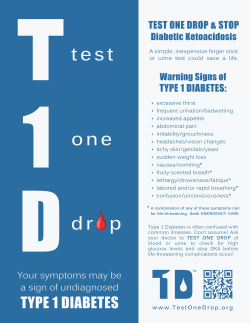
Update:  Test One Drop has updated both its mission and educational poster. The updated mission is:

“to bring awareness to the general public and the medical community of the similarities between the symptoms of Type 1 Diabetes (T1D) and common illnesses such as influenza, strep, and viral infections with the purpose of stopping delayed and misdiagnosed T1D which can lead to life-threatening DKA, t1d-educational-8-5x11_Newpermanent handicap, or death. Additionally, we are seeking a change in the Standard of Care Practices to require medical personnel to screen blood or urine samples for glucose levels before diagnosing sick patients with a common illness that might be masking or mimicking Type 1 Diabetes.”

Please check out the organization’s website and Facebook page. We in the diabetes community mourn the loss of children like Kycie and David. One purpose of Test One Drop is to keep the conversation going when the heartbreaking stories stop making headlines. Download the updated poster and share it with your friends, family, medical team, schools, and community.

**********

Update on my G5 Upgrade:  In September I wrote about some of the pros and cons of upgrading from my current Dexcom G4 CGM to the recently released G5. Shortly after I signed up for the upgrade, Dexcom ran low on G5 transmitters. Instead of receiving mine in early October, I am still waiting. According to my Dexcom account, the expected ship date is December 1. So the update is “Still waiting. No news.”

**********

Update on Medicare Coverage of CGMS:  Although not much has yet changed for CGM coverage by Medicare, some progress is being seen in the court system. Here is a link to a recent article at Medscape about Jill Whitcomb’s victory in Federal Court (Level 5 of the Medicare appeal process). I know of one person who won his Level 3 appeal based on the precedent of the Whitcomb case. Unfortunately Whitcomb is still at risk for further appeals by the insurance company.

**********

Update from the Unconference:  At the Diabetes UnConference in March, I met Daniele Hargenrader. Daniele has lived with Type 1 diabetes for 25 years and is a diabetes and health coach as well as a personal trainer and nutritionist. If you are seeking a way to dig your way out of the diabetes dumps or need a stocking stuffer for yourself or a loved one, you won’t go wrong with Daniele’s new book: Unleash Your Inner Diabetes Dominator. Check out the book as well as the Diabetes Dominator™ website with Daniele’s blog and links to her YouTube interview series. I will be reviewing this book in a future blogpost.DD Book Cover 2

**********

Last but Not Least News:  I have recently been invited to share some of my blogposts at Diabetes Daily – a well-known diabetes community with 2+ million visitors a year, almost 300K Facebook fans, and 70,000 newsletter subscribers. The posts will be published first on my blog and those with interest to the larger diabetes community will be syndicated at Diabetes Daily. This is a huge compliment for me and I thank all of you who have encouraged me on my blogging journey.

Balance

Laddie_Head SquareI wrote today’s post a year ago as part of D-Quote, an initiative created by Cynthia Zuber of Diabetes Light | My holistic journey to health. The purpose of her project was to give voice to members of the diabetes community and to increase advocacy and outreach during November Diabetes Awareness Month.

My diabetes quote is:

A well-developed sense of humor is the pole that adds balance to your steps as you walk the tightrope of life. William Arthur Ward

Type 1 Diabetes is the result of an autoimmune attack on our beta cells.  We can talk about the many manifestations of that attack with mention of missing hormones (insulin and amylin) and malfunctioning GLP-1 (glucagon-like peptide-1). Or we can simplify the discussion and say that our bodies lack equilibrium. Our bodies lack balance.

Those of us with Type 1 try to manipulate insulin, food, exercise, stress, etc. in an attempt to balance our blood glucose. Too much insulin, we go low. Too many carbs, we go high. What is too much today might be too little tomorrow. Unable to quantify many of the things that affect our BG, we walk on a tightrope and do our best not to fall off despite our many wobbles. At the same time we try to find a balance for how diabetes fits into our lives. We search for the happy medium between managing our diabetes so that we can live our lives and living our lives just to manage our diabetes.

Tightrope Walker

We can never be perfect with diabetes and sometimes the only thing we can do is laugh at our imperfect attempts at perfection. Sometimes a sense of humor is the best way to get through the day. The best way to put diabetes into perspective. The best way to make sense of our lives.

Check It Out!

Laddie_Head SquareIt’s been a while since I’ve shared what I am reading and listening to. In the past couple of days I read one blogpost and listened to two podcast episodes that I think are worth your attention.

At the top of my bookmarks for non-diabetes blogs is a website titled Heart Sisters. This blog is self-described as “All about women and heart disease – our #1 killer – from the unique perspective of CAROLYN THOMAS, a Mayo Clinic-trained women’s health advocate, heart attack survivor, blogger, speaker.”

Currently I do not have heart disease although as a woman in her 60’s with Type 1 diabetes, I know that I am at risk. The appeal of this website for me has less to do with heart disease and more to do with the shared experiences of women (really all people) living with a chronic disease.

On October 17, Thomas published a blogpost titled “How Minimally Disruptive Medicine is happily disrupting health care.” She highlights the Mayo Clinic’s KER (Knowledge & Education Research) team led by Dr. Victor Montori. Dr. Montori is well-known for his discussions of the chronically-ill patient’s “burden of treatment” and is a proponent of eliminating terms such as “non-compliant” and “non-adherent.”

Heart Sisters 1

Those of us with diabetes are experts at recognizing the burden that our care places on our lives. Thomas shares a quote from a 46-year old woman (V. T. Tran interview) whose comments will hit home for many of us:

“There is stuff that I am SUPPOSED to do, and stuff that I actually DO.  If I did everything I am SUPPOSED to do, my life would revolve around doctors and tests and such and there wouldn’t be very much left for living my life.

I strongly urge you to read this blogpost and dream about an ideal world where medical professionals no longer blame patients and instead work towards patient health goals with a secondary emphasis on diagnostic test numbers.

***********************

Juicebox Podcast is an offshoot of the well-known diabetes parenting blog Arden’s Day. In 2007 Scott Benner began sharing life stories after his daughter Arden was diagnosed with Type 1 diabetes at age 2. Scott proudly proclaims that he is a stay-at-home dad and the author of Life Is Short, Laundry Is Eternal: Confessions of a Stay-At-Home Dad. Never one to shy away from a challenge, Benner began a podcast in early 2015 and named it after the numerous juiceboxes his daughter has consumed to treat low blood sugars.

This weekend while walking the dog, I listened to two Juicebox Podcast episodes which focused on Dexcom. Episode #27 was an interview with Kevin Sayer who is the CEO of Dexcom. Rather than recreate the wheel, I’ll share Scott’s synopsis of the episode: “Dexcom CEO Kevin Sayer talks about the Dexcom/Google collaboration, pump integration, Android and iOS/CGM in the Cloud issues, Medicare, Medicaid, Adhesive concerns…. Sayer was an open book who dished about things that I thought for sure he’d decline to speak about.”

Episode #28 was an interview with Steve Pacelli who is Dexcom’s Executive VP of Strategy & Corporate Development. Once again per Benner: “Just 24 hours after the surprise FDA approval of the Dexcom G5 continuous glucose monitoring system, I spoke with Dexcom EVP Steven Pacelli and asked him all of the questions that were submitted to me by my blog readers and podcast listeners – I even threw in a few of my own. If you’re wondering about Dexcom G5 upgrading, cost, out of pocket, battery life and more?”

Juicebox Podcast 1

Both of these Dexcom interviews were released in August and some of the G5 discussion is a bit dated. A minor point because both conversations are fascinating with insider views of Dexcom’s past, present, and future. I found Sayer’s discussion of the Google/Dexcom collaboration to be particularly interesting with his views on device miniaturization and the possibilities for the Type 2 market.

As an adult with Type 1 diabetes, I am not necessarily the Juicebox Podcast‘s target audience—parents of children with T1. Some of Benner’s interviews focus on parenting issues such as 504 plans/talking with school administrators and I skip those. Many are interviews with other T1 parents sharing their unique stories. I listen to and enjoy those podcasts while giving thanks that I live with Type 1 rather than my children. Finally there are interviews with people such as NASCAR driver Ryan Reed, American Idol contestant Adam Lasher, John Costik of Nightscout, and the two Dexcom executives that are interesting to anyone with a connection to diabetes.

I subscribe to the Jukebox Podcast through iTunes and new episodes are automatically downloaded to my iPhone podcast app. You can also listen to individual episodes through iTunes.

***********************

Summary:

Read this!  How Minimally Disruptive Medicine is happily disrupting health care

Listen to this!  Dexcom CEO Kevin Sayer Talks

Listen to this!  Dexcom G5 Approval with Dexcom EVP Steve Pacelli

Cracked Again

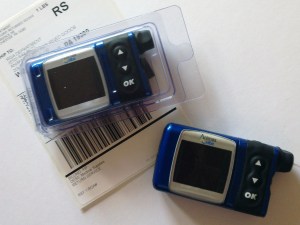
Laddie_Head SquareI just received a replacement Animas Vibe pump. At my last battery change, I discovered a crack in my pump from the top of the battery compartment down about 5/8 inch. Did I over-tighten the battery cap? I have no idea. Is it a design flaw or weakness in the type of plastic used for the pump case? Maybe. I would label it as an isolated problem but less than a year ago, I had my Animas Ping replaced for the same problem.

Animas Vibe Pumps2

In the seven years that I used Medtronic pumps, I cracked at least 3 pumps (maybe 4?). All of the cracks were in the exact same location: from the reservoir view window to the Esc button.Medtronic Pump Cracks

Maybe I am a kid who is rough with my pumps and break them whenever I wrestle and beat up my older sister. Nope. Maybe I get frustrated with diabetes and throw my pumps against cement walls whenever my BG tops 300. Nope. Maybe I have unlimited money and don’t take care of my diabetes devices. Nope.

So what is the truth? I am a middle-aged woman who will soon be called “old.” I line up my diabetes supplies in LIFO (last in, first out) order and never once in 39 years have I ever run out of supplies. I am not perfect at the diabetes game but I do a pretty good job. If nothing else, I am definitely mega-organized, methodical, and careful.

So what is the story?

After cracking the 3rd (or was it the 4th?) Medtronic pump, I spoke with a phone representative who told me that they would not replace any more pumps for me. Huh???  I called back a few days later and got a rep who asked how I was carrying my pump. I was using the Medtronic clip attached to my waistband as I had been ever since I started pumping. She suggested that after they replaced this pump that I should quit using the clip. She arranged for a free leather case (brown and ultra-masculine) which I hated. But from that day forward, I abandoned the Medtronic clip and began carrying the pump in my pocket. Never again did I crack a Medtronic pump. For whatever reason, the Medtronic clip on my waistband caused pumps to crack. For me. Obviously not for everyone. Medtronic pumps still ship with the same clip that for whatever reason didn’t work for me.

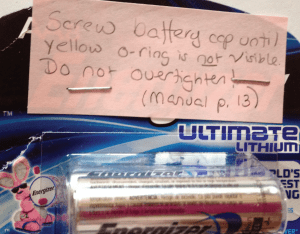
When I first started using the Animas Ping I got a few “No Delivery” (Loss of Prime???) error messages. It turned out that when I inserted the reservoir, I wasn’t pushing it in far enough or tightening the reservoir cap tight enough. With Medtronic I was always advised not to tighten things too tight. Whatever. I quickly learned to push Animas reservoirs in as far as I could and tighten the cap tightly. I have never had a reservoir error since then. So now I am cracking the pumps when I insert batteries. Am I over tightening them? I have no idea. But from now on, I will follow the Animas manual exactly as the photo below shows.Battery Insructions

So here I am. A middle-aged woman who has cracked 5 pumps in ten years of pumping. What happens with kids and teenagers who are rough with pumps? What happens with athletes who play football, hockey, and soccer? What happens with people whose pumps are randomly snatched by ceiling fans (Scott Johnson)? Although I hate to jinx myself, I have never had a pump failure. Just cracked cases. Except for the one rogue Medtronic rep, the pump companies have been fabulous in sending me new pumps as soon as possible.

So what’s the story? Is my experience mirrored by others on insulin pumps or am I just one rough, tough lady?

Beats me. As far as I am concerned, It’s just another day in a life with diabetes.

TuDiabetes: Type 2 Series

type2FB

Laddie_Head SquareToday (Thursday, October 1) TuDiabetes is launching a series of live interviews that are centered around Type 2 diabetes. Does that mean that those of us with Type 1 diabetes won’t learn anything? Absolutely not! All of these interviews will have relevance for anyone affected by any kind of diabetes—whether you have diabetes or love someone who does. This series will address topics such as diet, the basics of Type 2 diabetes, diabetes myths, emotional support, shame and blame, and family dynamics.

Today’s event is an interview with journalist and author Gary Taubes. Two of his well-known books are Good Calories, Bad Calories and Why We Get Fat. I have mentioned Taubes more than once on my blog and I highly recommend that you check out his books and/or articles. His writing is clear, concise, and highly persuasive as he argues that ourtaubesFB current obesity crisis is caused by certain types of carbohydrates rather than fats and excess calories. When you read his stuff, it really makes sense.

Today’s interview of Taubes is at 1pm PT, 4pm ET, 9pm GMT. To get more details about the event, click here. This event page provides information about Taubes and links to some of his books and articles. In addition there is a teal-colored box to click at the time of the event.

Please note that you must be logged into the TuDiabetes site to view the interview live. At the top of both the event page and the TuDiabetes home page are boxes to click to Log In or Register if you are new to TuDiabetes.

If you are unable to attend the event live today, the video will be posted in the TuDiabetes video archives in about a week.

Mark Your Calendars!

The schedule and details for the other interviews in the Type 2 Series can be found here. The speakers and dates are listed below. All of the event times are 1pm PT, 4pm ET, 9pm GMT unless noted otherwise.

Today, October 1    Live Interview with Journalist and Author Gary Taubes    Details here.

October 7    Addressing Shame and Blame with Susan Guzman    Details here.

October 13    Ansley Dalbo presents “Diabetes What to Know”    Details here.

October 22    D-blogger Mike Durbin, in Conversation with Rick Phillips    Details here.

November 11    Susan Guzman, “Rebranding Diabetes”    Details here.

November 18    Corinna Cornejo on Type 2 Diabetes Myths and Misconceptions    Details here. This event is at 12pm PT, 3pm ET, 8pm GMT.

More about TuDiabetes

TuDiabetes.org labels itself as “a community of people touched by diabetes, a program of the Diabetes Hands Foundation.” On this website you will find information about all types of diabetes, forums where you can touch base with other people affected by diabetes, a live chat feature, an extensive library of video interviews, and a blog feature which is under construction but currently lists links to member blogs.

If you have never checked out TuDiabetes, come visit. You can browse the site without logging in, but it is hoped that you will register and share your voice. If you used to participate and are flummoxed by the new platform, it’s getting busier, more organized, and you are missed. If you live with diabetes, TuDiabetes will make sure that you are never alone.