Playing Roulette with the TSA

Laddie_Head SquareThere are a couple of certainties in my life. If I want to travel, I need to fly. If I fly, I need to go to the airport. If I want to get to my airplane, I must go through a TSA security checkpoint. Sounds pretty simple, doesn’t it?

Like most people who travel with an insulin pump, my stress level rises as I approach the TSA checkpoint. My normal strategy is to stick my pump inside my waistband and wear a shirt long enough to hide it from view. If I see that I will be screened with a traditional metal detector, I rejoice because I have a good chance of walking through it without alarms and therefore no pat-down. Occasionally I set off the alarm and I’ve never been able to figure out why sometimes it alarms and usually it doesn’t.

If I see an advanced imaging technology scanner, I know it is a certainty that I will have to declare my pump and receive a pat-down. Some TSA personnel will tell you that you can wear your pump through the scanner, but I choose to follow the directive of my pump company that the pump should not go through the scanner.

I hate pat-downs and feel somewhat violated by them. I have been lucky that every pat-down agent has always treated me politely and I do my best to relax knowing it will be over soon. I live in total fear of having the horrible TSA experience that fellow Type 1 Kelly Kunik experienced in April of this year.

I once flunked the swabbing of my hands and that resulted in a search of my carry-on luggage as well as an extensive pat-down in a private area. Oops, I mean an area behind a partition although I think they also searched my private areas. Rumor has it that hand lotion can cause a false positive, so I try to remember to never use it before traveling. Kelly Kunik thought that soap might have been the culprit in her swab test.
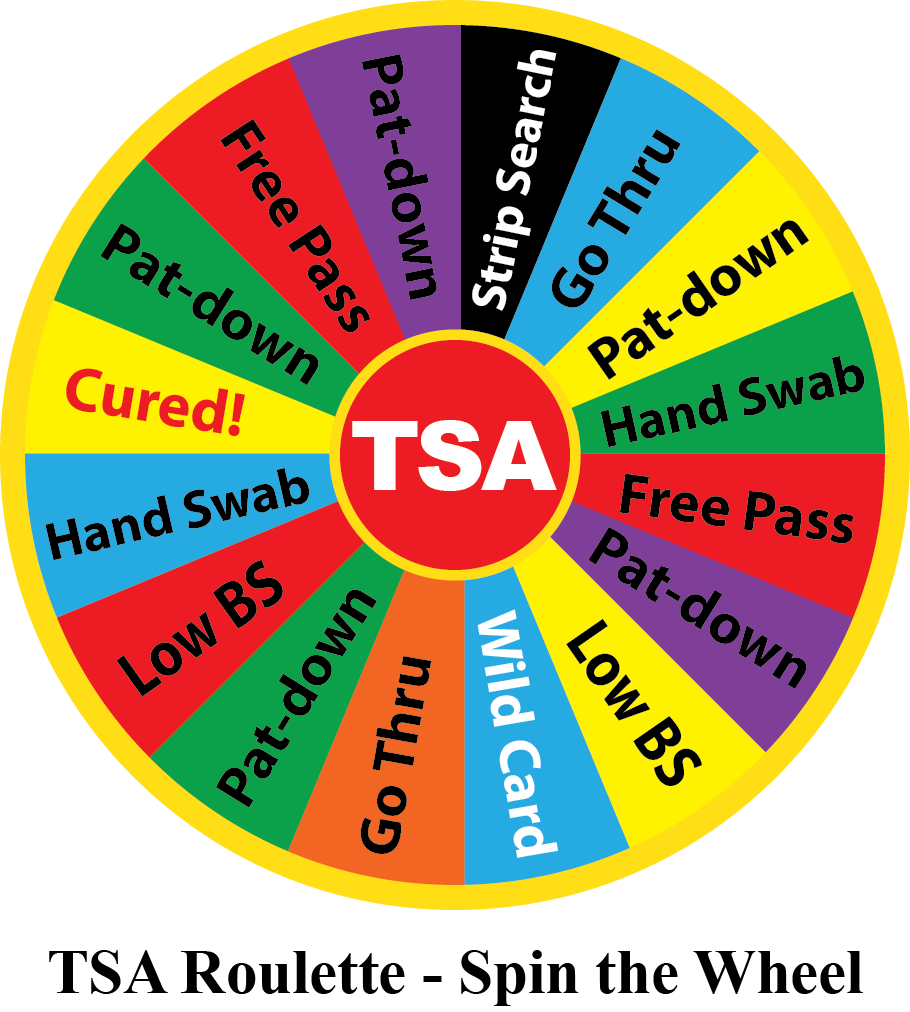
TSA RouletteBasically the TSA experience is a crapshoot. It’s a roulette game where you spin the wheel and what you get is what your get. Earlier this year there was an online petition urging for consistency in screening of people with diabetes. I have read that the TSA values inconsistency and I think it is unlikely that we will see much change.

My husband travels frequently and qualifies for TSA PreCheck. This is a program that according to Delta’s website is “an intelligence-driven, risk-based screening initiative through which eligible passengers are selected for expedited screening.” He goes through a special line at Delta checkpoints and walks through without removing his shoes, belt, or liquids and computer from his briefcase. It seems to me that there could be a program where people with medical devices, artificial joints, etc. could pre-register in some program that would help us move through security in an easier and more predictable way.

Every time I am selected for additional screening, I marvel at our security system where senior citizens in wheelchairs or with artificial joints and people with insulin pumps are being pulled aside every time that we travel. At the same time I read of people who have gotten guns and knives through the checkpoints. Not to say that a granny can’t be a terrorist, but in general, someone is wasting resources here.

I’ll be traveling later this week. Time to play roulette with the TSA!

Abby the Black Lab Discusses Nutrition

WHILE THERE IS NO SUCH THING AS A PERFECT DIABETES DIET, THERE ARE CERTAIN GUIDELINES TO KEEP IN MIND TO ENSURE HEALTHY EATING WITH DIABETES.  TODAY ABBY THE BLACK LAB HAS TAKEN TIME TO ILLUSTRATE SOME IMPORTANT NUTRITION POINTS.  PLEASE NOTE THAT HER ADVICE MIGHT DIFFER SLIGHTLY FROM WHAT YOUR NUTRITIONIST TOLD YOU.

*

Abby with Abby Crown_no backgroundAlthough I do not have diabetes, I know a lot about food.  Like most Labrador Retrievers, food is my hobby.  Food is my passion.  Food is my inspiration for excellence.  I think about it most of the time when I am not out shopping for new sunglasses and other fashion accessories.  Today I will share some guidelines that I am sure will help in your daily attempts to eat nutritiously while enjoying every bite of food and meeting your blood sugar goals.

*

Abby Drool_ Meal Chart3

*

Abby_Scale with hamb

*

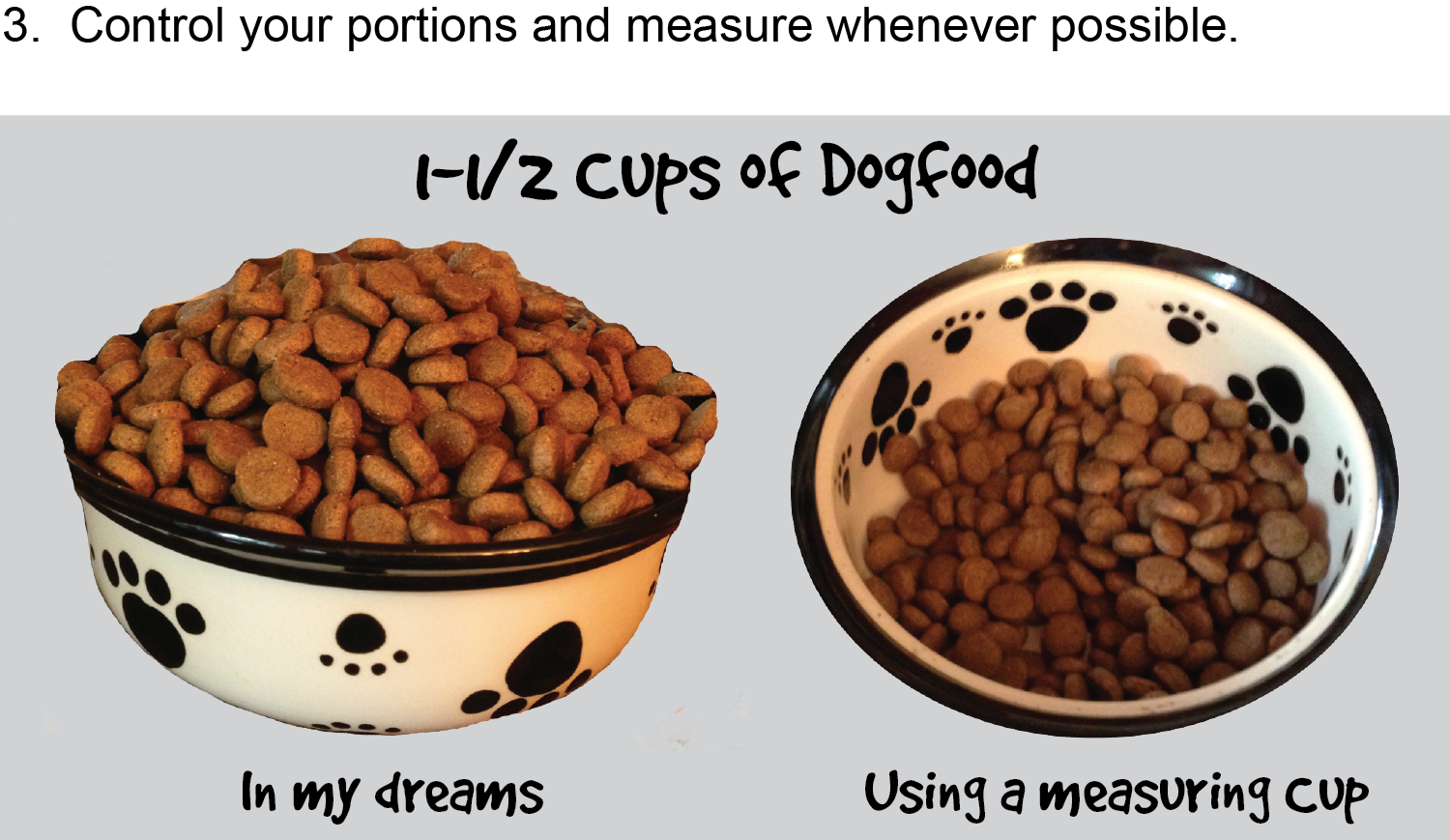
Abby_two bowls of dogfood2

*

Abby Cow2

**

Abby_My Vet Says2

*

Abby_Don't Ask Don't Tell3

*

If you have any questions about nutrition, please do not hesitate to leave a comment or send an email.  As always your friend, Abby the Black Lab.

Abby with hat and sunglasses

OmniPod’s New PDM

Sue May 2013_Head SquareI had anxiously waited for several months to get my new OmniPod PDM and smaller pods.  When they finally arrived I was very excited, but decided to finish using the old pods before starting the new ones.  On the advice of a friend I did save one pod in case something happens to the new PDM, so I can use it with the old PDM before a new PDM replacement arrives.

I started using my new PDM and pods five days ago.  During the setup, I was instructed to put in my ID Name, so I put in Sue.  Now every time I turn on my PDM, including when I insert a test strip for a blood sugar check, I see this screen:

PDM ID:

Sue

Press “Confirm” if correct.

I wondered what could possibly be the reason for this extra step before using the PDM?  Have there been people using the previous PDM who used someone else’s PDM by mistake?  Shouldn’t they give us a way to shut this feature off if we so desire? My son, who also has type 1 diabetes, lived with us until 3 months ago.  He uses the Medtronic pump, but if he used the OmniPod pump, we would have used different colored gel skins to differentiate them. That would have been easy enough to do, because I have four gel skins-two white, a lime green and my new black one that came with my new PDM.

Omnipod_Who am INow I’m the only one in the house who has diabetes, so there is zero chance of someone else here wanting to inject insulin.  So I decided to call Insulet Customer Support and ask if there was a way to turn this feature off.  I was told that no, there is no way to turn it off (in other words, suck it up).  I asked the reason for this feature, and was told that there are some families with more than one person with diabetes using the OmniPod PDM, and they added this feature to eliminate confusion.   I guess it never occurred to them to tell those people to use different colored gel skins on their PDMs.

OK I’m trainable, and I’ll get used to this extra step, but it still seems silly to me.  But on second thought, since this pump is not attached to the body like the conventional pumps, I suppose they are trying to eliminate any chance of being sued.  I sure hope no one has already tried to sue them for this, because I do love the company and their new smaller pods and hope they continue to stay in business until there is a cure for diabetes, quirky PDM and all.

Untethered at the Beach

Laddie_Head SquareMy summer beach vacation is approaching and I have already started a list of to-do’s, must-haves, and don’t-forgets.  Like most people with Type 1, I pack a double or triple supply of pump and CGM accessories, test strips, Novolog insulin, and all of the other paraphernalia needed to care for my diabetes.

I don’t normally keep long-acting insulin (Lantus or Levemir) at home as a back-up for my pump because I feel comfortable with an active and easily-filled prescription at a national chain pharmacy.  But when I go on vacation in a remote location or out of the country, I always take syringes and a vial of Lantus with me.  I could also take a vacation loaner pump from Animas, but for short trips I don’t bother.

Beach GraphicsAlthough my Animas Ping is technically waterproof, I don’t like to wear it in the ocean for fear a rogue wave might rip it off and send it down to Davy Jones’ locker.  Even in a pool, I don’t want to deal with the consequences of water intrusion while I’m away from home.   Because of the fear of theft, I would never leave my expensive medical device in a cooler on the beach or near the pool.  But at the same time, I don’t want to abandon the convenience and precision of my pump for mealtime and correction boluses.  And I cannot be without basal insulin for more than an hour without hard-to-correct blood glucose excursions.

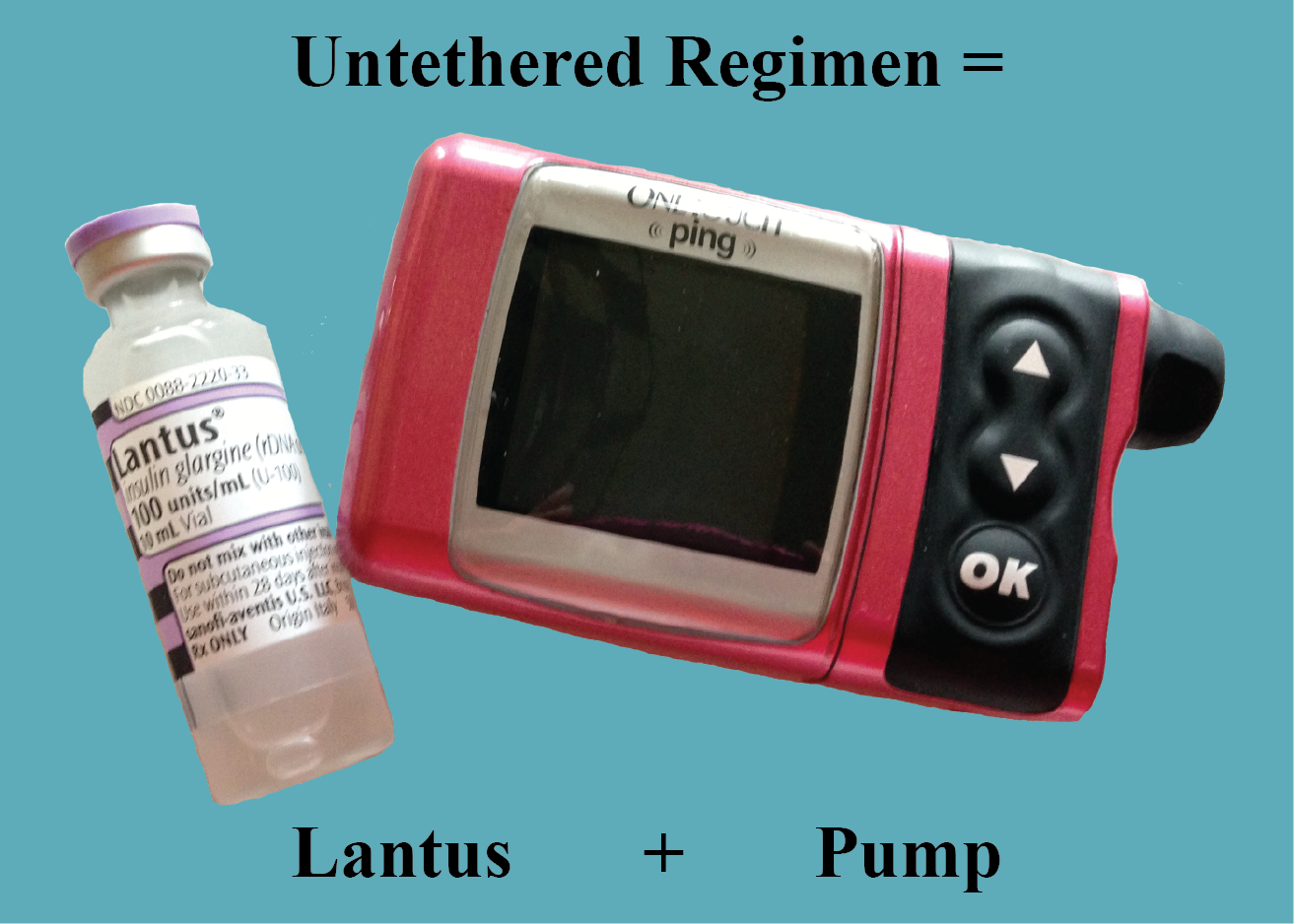
My solution for beach and lake vacations is to use the untethered regimen for my insulin.  The untethered approach involves taking about 75% of my basal insulin by daily injections of Lantus (or Levemir) and using the pump for the rest of my basal and for most or all of my boluses.  The advantage of this is that it allows me to leave my pump safely in my hotel room or lake cabin for hours at a time because most of my basal requirements are being met by the Lantus injection.  The advantage of having my pump cover part of my basals is that I can program a bump in my basal rates during the pre-dawn hours.  Also, IMO it is better not to suspend the pump for hours on end so I have a pump pattern giving me a constant 25% of my basal needs to supplement my Lantus injection.  Some of this basal goes down the drain when I am not wearing the pump, but with my increased activity all day long, I actually don’t need it.

Lantus and PumpIf I am going to have a  daylong outing with required boluses of fast-acting insulin, I carry syringes and a vial of Novolog in a Frio case or even more conveniently, take along a Novolog pen.  But on this vacation I know that I will be close to the hotel all of the time and won’t need that option.

The best explanation of the untethered regimen can be found in a 2004 article by Steve Edelman.  Although I only use this regimen on vacation, there are others who use it every weekend or athletes who use it all of the time.

I was motivated to write this post after reading a 6/27/13 blogpost by Sarah Kaye Sugabetic.me  in which she describes how she juggles the use of her Ping pump along with her Omnipod.  She states that the Omnipod is great for POOL TIME and I agree that a Pod would be perfect for beach and lake vacations.  Unfortunately my insurance company is not going to pay for a second pump system just so that I can swim and snorkel tubeless a few days a year.  Sarah has also been spreading the idea of painting her Pods with nail polish and maybe my insurance will approve them because they are a fun fashion accessory in addition to being a life-saving device:)

In the past the untethered regimen has worked well for me on water vacations and I expect the same success this year.  It is also a reminder that there are creative ways to increase the flexibility of our diabetes tools by thinking outside the box.

Willpower with Frog and Toad

Laddie_Head SquareOne of my favorite children’s stories is “Cookies” found in Frog and Toad Together by Arnold Lobel.

The plot follows the two amphibians as they work out how to resist eating a whole batch of cookies baked by Frog.  After eating “one last cookie” several times, Frog determines that they need “will power” to stop eating all of the cookies.  In reply to Toad’s question about the meaning of will power, Toad says “Will power is trying hard not to do something that you really want to do.”  They consider various ways to stop Frog and Toadeating the cookies such as putting the cookies in a box tied up with string or putting them on a high shelf.  But they are smart enough to figure out that scissors and a ladder can easily overcome those obstacles.

Finally Frog takes the cookies outside and yells for the birds to take them away.  When Toad bemoans the fact that they no longer have any cookies, Frog replies “Yes, but we have lots and lots of will power.”

I’m not sure that it is really willpower when you take away temptation, but removing tempting treats from my house is the best way for me to resist eating them.  I have very little problem resisting “bad” food throughout the day, but the post-dinner hours are another story.  It’s a boredom issue, I think.  It’s also an issue that chocolate tastes really good and sometimes I crave it so much that it hurts.  I’ve never been able to figure out why I am so satisfied with one piece of chocolate when it is a sample given out at Costco and then I can’t stop at one (five) at home.

I love cookies.  I love candy.  I love ice cream.  I hate willpower.

Lest you think that Frog and Toad have it all figured out, the story ends with Toad’s scathing dismissal of willpower:  “You may keep it all, Frog.  I am going home now to bake a cake.”

I know what you mean, Toad.

It’s Not as Hard

Laddie_Head SquareI am at a stage in life where caring for my Type 1 Diabetes is easier than it has been for most of my life.  I initially titled this post as “It Gets Easier”.  I decided that to use the word “easy” anywhere on the same page as diabetes was a total travesty.  Diabetes of any type at any time is always hard.  Hard as rocks.  Hard as nails.  Hard as anything you can think of.  But right now for me it’s not as hard as it used to be.

Partial hypo-unawareness makes it easier for me not to over-correct.  No more sitting at the kitchen table in the middle of the night eating bowl after bowl of Frosted Flakes in a soaking wet nightgown.  No more drinking an appropriate glass of orange juice followed by just one Wheat Thin that turns into half a box.  Most of my nighttime lows are taken care of by one or two glucose tabs eaten from the stash on my bedside table.  (Note to self:  don’t tell your readers how often you silence Dex alarms to roll over and go back to sleep.)

I am currently retired from my part-time job and I am able to walk my dog every morning right after breakfast.  Through most of my years with diabetes, breakfast has been my most problematic meal.  The same meal could have post-prandial readings that varied by a hundred or more points from day to day.  By walking immediately after eating, I usually prevent the extreme spikes that require large doses of insulin to bring me back to an in-range reading.  Although I occasionally have an outrageous high with no discernible reason, most of my mornings are somewhat level and predictable now.

I am lucky to be able to escape Minnesota winters and spend several months in Arizona.  This means that my exercise level can be consistent throughout the year rather than taking a nosedive in the endless dark, cold, and ice of winter in the Upper Midwest.  I am a true believer that exercise is the key to a successful life with diabetes and consistency in exercise helps for stable basal rates.

My newest continuous glucose monitor, the Dexcom G4 Platinum, has improved my physical and mental health in almost immeasurable amounts.  This is my 3rd CGM system (after the Medtronic CGM and the Dexcom 7+), but it is the first one that has been life-changing.  Occasionally it will cry wolf for non-existent lows, but in general it is incredibly accurate and alerts me to lows before I reach the 50’s and 40’s.  I can go about my day with the confidence that it will alert me when I’m out of range and it lets me forget diabetes sometimes.

At age 61, I’m past those pesky hormones that can wreak havoc with BG levels throughout the month.  There are some definite downsides to having fewer hormones, but blood sugar control is not one of them.

I eat fewer carbs than I used to and average about 100 grams per day.  In the old days, that was considered Low Carb.  Because there are so many people who go much lower than that these days, I think I’m now on the low end of Moderate Carb. I believe that each one of us has to make our own choices when it comes to our diet, but I have never been able to match insulin to high carb meals and snacks.  By reducing the post-meal peaks, I’ve gotten rid of many of the lows that result from preventing or treating those highs.

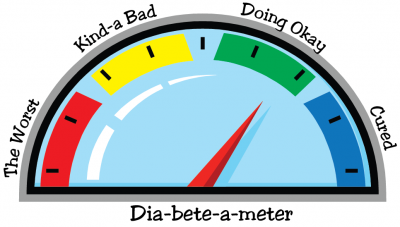
Diabete a MeterI think the reason I’m feeling good these days is that my hard work seems to be having good results.  We’ve all had spells where we do the “right” things and diabetes just laughs at us.  But right now it’s smiling.  How long will it last?  Probably not long.

So do I have Type 1 Diabetes figured out?  Nope. I still love sweets and struggle with evening carbfests that lead to bad overnight highs and lows.  I still have highs that make no sense at all.  When I go high, I can’t seem to take enough insulin to bring my BG back to normal.  I have daily lows in the 60’s and 70’s.  I am fighting my third frozen shoulder despite having good A1c’s.  I have to take diabetes into account for almost every activity in my life.

But most of the time, I’m doing okay.  And that’s a win in my book.

Pin the Tail on the Donkey: Buying a New Pump

This post is my June entry in the DSMA Blog Carnival. If you’d like to participate too, you can get all of the information at http://diabetessocmed.com/2013/june-dsma-blog-carnival-3/ The topic is: How do you select the diabetes devices you use? To others looking into new or replacement devices, what would be your best advice to someone shopping around?

Laddie_Head SquareWhen I select medical devices, I put on a blindfold, turn around 3 times, and pin the tail on the donkey.  Oops, wrong game.  But that is what it felt like when I bought my last pump in December 2012.

When I began my pump search, I was using an out-of-warranty Medtronic Revel pump and a Dexcom CGM (continuous glucose monitor).  I had previously used the Medtronic CGM and found it to be painful and inaccurate.  But I loved having a sensor augmented pump and only having to carry one device.  So a pump/CGM combo was my #1 criteria for my next pump.  Unfortunately there was no device on the market that had the features I desired given that I was unwilling to use the Medtronic CGM.

Medical device companies are prohibited from giving detailed information about pumps in development and they have no control over how long FDA approval will take.  So ultimately I had to make my purchase decision based on my best guess of which future pump would have the features I wanted along with a guess of how soon it would get to market.  So I put on my blindfold and went to work.

Pin the TailI was very happy with my Medtronic pump and I knew that their improved Enlite sensor system would “soon” be available in the USA.  Animas was on track to release a pump that would be combined with the newest Dexcom G4 Platinum CGM.  The new kid on the block, the Tandem t:slim, was a touchscreen rechargeable pump that would also eventually link up with Dexcom.  I didn’t have any reason to consider the Accu-Chek pump, so I ignored it in my decision.  I don’t mind tubes and was not interested in the Omnipod.

Normally I would love to make a chart and compare features pump by pump.  But I didn’t have sufficient information to do that with my most important decision points. I had no way to evaluate the Medtronic Enlite sensor system, and I wasn’t willing to leave Dexcom to take a chance on it.  I found the Tandem pump intriguing, but they had no upgrade program in place and I wasn’t willing to risk not having an affordable pathway to buy their future sensor integrated pump.  I chose Animas because it will be the first pump released with an integrated Dexcom CGM and I am guaranteed a $99 upgrade fee to get that pump.

Am I happy with my Animas Ping pump?  Not really.  I knew that I would hate the menu system, but I actually underestimated how much I dislike it.  But it’s a good pump and it does the job of delivering my insulin safely.  Do I regret my decision?  No, because I made the decision based on the future which has not arrived yet.  I am still waiting for the Animas Vibe to come to market and I think that it will fix the things I don’t like about the Ping.  It will definitely give me the pump/Dexcom combo that was and is my #1 requirement.

My advice to others who are shopping for their first pump or a new pump?

Do your homework:

  • With yourself.  Decide which features are most important to you.  Do you want tubeless?  Do you require a large reservoir?  Do you want a Pump/CGM combo?  In most cases you won’t get everything on your wish list, so be open to considering several brands of pumps.
  • With the pump companies.  Visit their websites and request their brochures.  If a local rep is available, meet with him/her to see the pump and learn more about it.  Omnipod even has a non-operational sample pod that allows you to try it out on your body.
  • With your medical team.  If this is your first pump, your medical team may require classes about pumping and carb counting before prescribing a pump.  I think it’s valuable to ask for your team’s opinions on pumps, although ultimately you should get what you want not what your doctor likes.  Your doctor’s office might also have demo pumps and infusion set samples.
  • With your insurance company.  Many insurance companies will cover all pump brands.  But if they don’t, it’s good to know that up front.  For example, Medicare will not pay for the Omnipod at this time.  Also, it’s a good idea to determine your financial responsibility for the pump purchase and the ongoing supply expense.
  • With other pumpers and the online community.  Message boards and blogs are a wonderful source of information and opinions on pumps.  Fortunately most people end up happy with the pump that they choose, but it’s still helpful to learn as much as you can about the pros and cons of each brand.

It has been six months since I purchased my pump.  The questions I would have liked answered then are still unanswered.  The Animas/Dexcom pump has been submitted to the FDA, so there has been progress.  I have some regret that I did not go with the t:slim, but for the most part I think I made the right decision.  And if you think about it, it’s only 3-1/2 years until I go shopping for my next pump!

To Dose or not to Dose?

Laddie_Head SquareTo dose, or not to dose, that is the question.

That’s not exactly what was phrased by Hamlet in the opening soliloquy of the Shakespeare play. But it is a question heard frequently around the diabetes online community when considering our CGM (continuous glucose monitoring) systems. And it is a question that some would argue has life or death implications.

My answer to this question is sometimes, in certain circumstances, and within certain guidelines.

To Dose or not to DoseMy current CGM is the Dexcom G4 Platinum and it is by far the most accurate system that I have used. The numbers are almost always in the ballpark with my meter readings. Twitter is littered with my photos of identical G4 and Verio meter readings. Earlier this week I downloaded my Dex into Dexcom Studio and my 3 meters into Diasend. Comparing the 2-week reports from each, my average BG differed by only 3 points. The standard deviations were also 3 points apart and my graphs were remarkably similar. So essentially I am getting the same information from these devices.

Like everyone with Type 1, I am awash in data and make decisions knowing that none of the numbers are 100% accurate. My meters are allowed to have a 20% variance. My pump is very precise in its insulin delivery, but my body’s absorption of insulin may vary based on the location and age of the infusion set, my exercise patterns, and various hormonal excursions. There are inherent inaccuracies in carb counting. Food labels are allowed a 20% fudge factor. Fruits may differ in their carb impact based on ripeness or variety. One portion of vegetable soup might have more potatoes than another portion filled with green beans and squash. So the Dex CGM is not perfect, but neither are my other tools.

Meter and Dexcom2I start my day with a fasting BG reading on my meter. If a correction is needed, I bolus for it. If my Dex calls for a calibration, I record the number. After this I will rely on my G4 for my breakfast bolus and throughout the morning for alerting me to lows and highs. Late morning I’ll take a fingerstick and make sure that the Dex is still on track. If a correction bolus or snack is needed, I’ll take it. Then when lunch comes, I’ll usually use my Dex as the guide for my bolus along with carb counts. Same for the afternoon, dinner, and throughout the evening. I use the meter for a “grounding” every few hours, but rely on the Dex the rest of the time.

I play the game of mistake management and try to minimize the number of diabetes mistakes that have serious consequences. If I am woken at night by a high alert from my Dex, I will double check the reading with my meter before taking a correction bolus. That is because an overdose of insulin while sleeping is potentially life-threatening. If my Dex wakes me with a low alert, I often pop a couple of glucose tabs from my bedside table without a meter confirmation. The result of a Dex mistake in this case is just an errant high from eating glucose tabs.

Similarly, I take driving with Type 1 Diabetes very seriously. If I’m on the south side of BG 100 or have any symptoms of a low, I will always test with my meter before driving. No way that I want to have a low at 65 miles per hour. On the other hand, if the Dex shows me level at 110 and I feel good, I’ll probably trust the Dex and head out. At this point I’m comfortable I’m in a target range that is safe although I may not know the exact number.

During the daytime, I usually trust the Dex high alert and bolus based on it. I have to admit that I get some false lows from my G4, but I get very few false highs. Sometimes it will alert me with a 180 reading and I think “no way!” But the Dex is usually right.

My trust in my G4 is bolstered by an average of 8 meter readings a day. Some of these are for calibration. Others are before driving or halfway through a round of golf. In general, my meter helps me trust my Dex while the trends on my Dex helps me trust my meter. (As a caveat, I don’t trust the Dex on the first day of sensor insertion and I lose confidence as it approaches Day 14.)

In summary, I confidently bolus throughout the day based on my Dexcom G4 readings. Why can I do this? First, because I also test a lot with my meter. Secondly, because I have the Dexcom G4 to alert me if I make a mistake.

(I will end this post by reminding everyone that Dexcom and our doctors advise us never to bolus based on our CGM numbers.)

Diagnosis by Pancakes

Laddie_Head SquareI was diagnosed with Diabetes Mellitus in mid-November 1976.  I wasn’t diagnosed with Type 1 diabetes.  I wasn’t diagnosed with Type 2 diabetes.  Those terms were not in use in the 1970’s.  I went to the eye doctor because I was having blurry vision and thought I needed new glasses.  I suspect I smelled like fruity nail polish remover, and he told me that it was likely I had diabetes and should see a doctor immediately.

I was 24 years old, recently married, and although I had heard of diabetes, I was totally ignorant about the specifics of the disease.  I dutifully went to see the recommended internist the next day.

Now you’re expecting to get to the part of the story that says he took my blood and tested my c-peptide and GAD antibodies.  Those tests were not part of the laboratory diagnostic arsenal then.  I was given a urine test and told to go downstairs to the medical office restaurant.  I was instructed to have a pancake breakfast with lots of syrup and come back in two hours.  Once again I was given a urine test and was immediately told that I had diabetes.  I didn’t know enough about diabetes to be worried, scared, or surprised.Pancakes This was a Friday and I was told to go home for the weekend and be admitted to the hospital on Monday morning.  That seems odd to me in retrospect, but Monday morning came and I started my life as a PWD with a 4-day hospitalization.  Like many Type 1’s, I learned to give shots on an orange.  I was discharged with a 2,200 calorie exchange diet and prescribed Ketodiastix for testing my urine for glucose and ketones.  I was instructed to take 35 units of Lente insulin daily in one injection.  No mealtime insulin in those days.

Not once in the 36 years since my diagnosis has any doctor suggested that I wasn’t in the category of what we now call Type 1 diabetes.  I have still never had a c-peptide or an antibody test.  My understanding is that I will be required to have a c-peptide test when I reach Medicare age in order to keep my pump.

With today’s sophisticated lab tests and the increased knowledge about diabetes, I don’t understand why so many young adults are being misdiagnosed as Type 2.  They are given pills instead of insulin and often must struggle for months or years to get a correct diagnosis.  Many doctors are blinded by the Type 2 epidemic and are not considering that the incidence of Type 1 in all ages is also increasing.

It makes me think that maybe a pancake diagnosis wasn’t so bad after all.