Introducing Rick Phillips

Laddie_Head SquareRick Phillips might be one of the busiest people in the Diabetes Online Community (DOC). The easiest place to find him is at TuDiabetes. He hangs out there under the name of “Rick the Blogabetic” and is an active blogger, forum participant, and member of the Care Team.

For those of you who are not active in the TuDiabetes community, the Care Team is composed of a group of dedicated members who moderate the forums, welcome newcomers to the site, post birthday greetings, look out for spammers, and provide support as needed to members of the community. It’s a big job and a compliment to be asked to be part of the team. After a few weeks of being part of the Care Team, Rick wrote a blogpost summarizing his thoughts on the “challenge to serve”. Here is an excerpt:

I truly love this site [TuDiabetes] and over the last few weeks I come to love it even more than today. Thank you so much for asking. It means a lot to me and if the reader of this post is ever asked and they accept the challenge, they will find a new way to serve you fellow diabetics and believe me it is so worthwhile.

Rick decided in late April 2013 that he needed to do something that was mega-impactful and he pledged to write 200 blogposts in one calendar year. Thus was created Rick Rick_2Rthe Blogabetic. Rick is somewhat like me in that he never uses one word when ten will do. Therefore his 200 posts represent a tremendous amount of writing and research on a vast array of subjects. You can read about anything from “Dogs and Endocrinologists” to the whimsical story of “Chick Duck” and from “What is -30-” to “When are We Not Diabetic?”  To learn more about Rick, you should read his 199th post in which he described what he learned as a result of his blogging marathon. BTW Rick the Blogabetic is still going strong although maybe not at the pace of 200 posts per year.

In recent weeks I have run into Rick at TuDiabetes both in the forums and on his blog. I have read his guest-post at Karen Graffeo’s blog Bitter Sweet™ where he compares diabetes education to spring rains. I have seen him (@LawrPhil) in the thick of the controlled mayhem of #DSMA TwitterChat on Wednesday evenings. Facebook? Yes, he’s there too. So if you don’t already know Rick, chances are you will soon!

Rick and I have a lot in common. He has had Type 1 for 40 years compared to my 38 years. He is somewhat younger than I am, but we have been married approximately the same length of time and our two sons are the same age. Even our grandchildren are close in age. We both live with multiple autoimmune conditions. Here things diverge. Rick lives with severe Rheumatoid Arthritis (RA) that has had a huge impact on his life.  He indicates that his arthritis is much more difficult to live with than diabetes and that the severity of his arthritis required him to abandon the career he loved in education/business/public affairs. Although I also have arthritis, mine is more easily managed and has not yet required me to make significant changes to my lifestyle.

Next week Rick will be guest-blogging at Test Guess and Go about the connection between Type 1 diabetes and Rheumatoid Arthritis (RA). Because many of us with one autoimmune condition have clusters of autoimmune issues, this 3-part series should be an interesting and educational read. Rick will tell his personal story in Part 1, talk about his treatment regimen in Part 2, and conclude with a somewhat scientific discussion of the links between diabetes and RA in Part 3.

Thank-you to Rick for taking time to share his story with us. I encourage those of you reading this blogpost to take time to get to know Rick in the many social media platforms of the DOC. You will quickly learn that he is a Diabetes Advocate to the core and that he is a man dedicated to serving others. Those of us with diabetes are lucky to have him on our team.

Join the Conversation

Conversations Banner_All

Laddie_Head SquareI really enjoyed my Type 1/Type 2 Conversations with Kate Cornell of Sweet Success: My Life with Type 2 Diabetes.  Our first foray into collaborative blogposts was a four-part series.  We had ideas for about ten posts, so I don’t think that this is the end of Kate/Laddie conversations.  But for now we’ve retreated into our respective corners with a greater understanding of what the “other type” of diabetes thinks and experiences.

When Kate and I started our project, one of our goals was to inspire others in the Diabetes Online Community (DOC) to initiate similar conversations.  Real communication is often lacking in our 21st Century world and the DOC has not been exempt from conflict and misunderstandings.  Fortunately many bloggers have become increasingly vocal about working to unite as one community regardless of medical history or type of diabetes.  (A good example of this is Kerri’s post titled Learning from My Peers.)  Together we can make progress; individually we spin our wheels.  We don’t need to agree on everything and we certainly aren’t the same.  But we can talk to each other.  We can respect each other and we can learn from each other.  We can build bridges to make the DOC a stronger community.

Kate and I hope that others in the DOC will jump on the communication bandwagon and initiate some conversations.  Type 1/Type 2 discussions are great, but don’t be limited by that combo.  How about a LADA talking to Type 1 diagnosed as a child?  How about a Type 2/Parent of a Type 1 dialog?  How about a pregnant Type 1 talking to a young T1 mother?  How about a conversation with your spouse or child?  Maybe a cat-lover and dog-owner (or would that generate too many fireworks?)  The possibilities are endless.

If you would like to participate in the Conversations project, please check out the Conversations page at Test Guess and Go.  You’ll find a few hints on how to proceed and information about obtaining the Conversations banner and graphic if you’d like to use them.  (I can easily customize the graphics to fit whatever your conversation is, so be sure to let me know what you need.)

What are the rules?

  1. Be respectful.
  2. Have fun and be creative.  If you don’t want to write a long post, consider using Storify with Tweets and/or Instagram photos.  Write limericks back and forth.  Publish email conversations.  Write comic strips.  Create vlogs.
  3. Feel free to tackle controversial subjects but don’t avoid fluff pieces that will make us smile.
  4. Choose a partner.  A familiar online friend, a new Twitter follower, a big-name blogger, a new blogger, an acquaintance from a TuDiabetes message board.  Don’t be shy and send an invitation.  The collaboration is just as important as the finished product.
  5. Don’t forget #1.  Be respectful.

If you need help or ideas, please contact me or Kate through the contact form on her homepage.  Once you’re published, send me your link and I will add it to the list of blogposts on the Conversations page.

Please help the project grow.  All you have to do is join the conversation!

*****

If you missed any of our Kate’s and my conversations, you can find them here:

Type 1/Type 2 Conversations: Talking about Weight

Type 1/Type 2 Conversations: Diabetes in the Great Outdoors

Type 1/Type 2 Conversations: Friends and Family

Type 1/Type 2 Conversations: Food, Glorious Food

*****

Type 1/Type 2 Conversations: Talking about Weight

Conversations BannerI first metKate Cornell in early 2013 when I began listening to the podcast archives of DSMA Live.  Her February 2012 interview introduced me to a woman who knew an incredible amount about diabetes and was well-spoken and passionate.  As I began to follow her blog, SWEET SUCCESS: MY LIFE WITH TYPE 2 DIABETES, and read her comments around the diabetes online community (DOC), I found myself thinking that her opinions mirrored many of my own thoughts about diabetes and life in general. The fact that I have Type 1 diabetes and Kate has Type 2 diabetes just didnt seem to make any difference.

*

Kate and I recently came up with the idea of collaborating on a series of four blogposts in which we will initiate a dialogue on issues that affect people in the diabetes community.  We expect to learn a lot from each other and we hope that our Type 1/Type 2 Conversations will lead to more communication and mutual respect between people with all types of diabetes.

Laddie_Head SquareLaddie:  For the first Type 1/Type 2 conversation, I figured that I wouldn’t shy away from a difficult topic:  Weight.  Weight is the elephant in the room in most discussions and arguments between people with Type 1 diabetes and those with Type 2.  Weight is synonymous with blame, guilt, and ignorance.

Many people with Type 1 diabetes are thin and some of us were almost skeletal when we received our diabetes diagnosis.  When you have Type 1, it is easy to associate being thin with “Not My Fault.”  If you become comfortable in this thought process, the next logical step is to become comfortable with the stereotype of Overweight = Type 2 = Their Fault.

A long time ago I learned to stay out of the Type 1/Type 2 wars and keep my mouth shut.  That doesn’t mean that I didn’t believe a lot of the stereotypes.  I’m not going to be virtuous now and say that I have totally seen the light.  No, I’m going to say that I just dont know.

In recent years I have read a lot of research that indicates that Type 1 and Type 2 are just different manifestations of inflammation and autoimmunity gone astray.  Maybe just a flip of the coin made me Type 1 instead of Type 2.  I have a friend who was diagnosed with Type 2 several years ago.  She has always struggled with her weight.  She and her husband go on the same diet.  He loses twenty pounds and she loses one.  She wonders whether the abnormalities of metabolic syndrome and Type 2 diabetes are responsible for her weight problems, not the result of her weight problems.  She might be right.

I am very thankful that except for an occasional extra five or ten pounds, I have never struggled with being overweight.  In my many years participating in the DOC, I have learned to be less judgmental and I have gained more understanding of the issues that those with the “other kind” of diabetes face.  In the last two years I have gained 5 pounds that I have been trying to lose.  I’ve had no success.  Do I think that it would be easy to lose 50 pounds or 100 pounds.  No way.  I can’t even lose 5 pounds.

Many people with Type 2 diabetes struggle with weight.  Many people without diabetes struggle with weight.  Many people with Type 1 diabetes struggle with weight.  When I read the definition of weight in my dictionary app, I only see that weight can be measured in things like mass, thickness, gravity, and load.  I don’t see judgment.  I don’t see criticism.  I don’t see blame.  We can learn something from that.

Kate_photo_RKate:  The subject of weight and diabetes is certainly a good place to start our conversations. Laddie hasn’t shied away from what is usually a very controversial subject.  Our society is obsessed with weight: how to lose it, how to remain pencil thin and blaming those who carry too much.

I have struggled with excess weight for most of my adult life.  I was a thin child and teenager.  I married at 20 and once I began having children, the weight just crept up.  I always thought it was because of the pregnancies and my inability to take off the “baby weight”.  Whatever the reason, it was difficult to lose.  Fast forward to my diagnosis of type 2 diabetes at age 50 and cue the guilt.  It doesn’t matter that I’ve spouted, quite often, about how our type 2 dxs aren’t our fault; the guilt is still there.  “If I had just lost weight earlier.” “If I’d just worked a little harder.”  It’s easy to blame ourselves.  Here’s the thing: diabetes, regardless of type, is NOT the patient’s fault!  Yes, those of us with type 2 are often overweight or obese, but so are millions of other people and they don’t have diabetes.  Sometimes it’s hard to remember that when the media is waving the fat shaming in our face.

I was diagnosed nine years ago this summer.  I have educated myself and made some significant changes to my diet and lifestyle.  (That doesn’t mean I’m always perfect.  Far from it.)  I did manage to lose some weight early on, but things have changed in the last year. Even though I now eat very few processed carbs and more veggies; even though I exercise for 30 minutes nearly every day, I am gaining weight.  It could be due to a myriad of hormone issues: thyroid, female, insulin…but in the end it doesn’t matter what Weight_2the reason is for my inability to take the weight off.  I’m trying as hard as I can and it won’t budge.  Is that my fault?  I don’t think so.

Many people with type 1 are weary of being told that “if you lost a bit of weight you could probably get rid of your diabetes.”  Guess what, so are those of us with type 2.  The myths that revolve around diabetes and too much sugar, too little exercise, too many pounds are just that – myths.  No matter what the diabetes type, none of us did this to ourselves.  None of us asked for this disease.  Quite a few of us, with diabetes and without, could benefit from losing weight, so why does society and the media vilify those with type 2 diabetes for needing to lose pounds?

Yes, I used to love to eat pizza.  Yes, I used to take a donut from the box in the break room at work.  Yes, I ate fast food and processed foods.  Yes, I used to eat bread.  Yes, I bought into the travesty that was the Food Pyramid.  Yes, I have type 2 diabetes.  Other than the diagnosis, how am I much different than the majority of Americans?

Laddie_Head SquareLaddie:  I have learned enough about Type 2 diabetes not to blame the individual.  I don’t think that there is a magic formula to becoming overweight and I certainly don’t think that being thin is a virtue, although popular media often tries to convince us otherwise.  I do know that when I gain unwanted pounds, I feel sluggish, frustrated, and full of guilt for my perceived weakness.

I blame society for much of the increase in average weight of our population.  Many people, unfortunately including a lot of children, lead a much less active life than did their parents and grandparents at the same age.  Too much TV and video game time has turned many of us into couch potatoes.  Many children live in environments where it is not safe to walk to school or play outside unsupervised.

Bad food is everywhere and often is less expensive than quality food.  I believe that carbs are wonderfully delicious and highly addictive.  More than once I have admitted to being incapable of eating carbs in moderation.  No chocolate chip cookies is easier for me that just one chocolate chip cookie.  No chocolate-covered donuts is easier for me than just one chocolate-covered donut.  No potato chips is easier than just one.  Also we are starting to see studies that indicate that the ubiquitous low fat heart-healthy diet is in fact responsible for making us heavier and less healthy.

As Kate mentions, there are many people who are overweight but don’t have Type 2 diabetes.  Weight is one trigger for Type 2 and we need more knowledge about the other triggers.  We read statistics on the huge increase in the number of people with Type 2 and the increasingly younger ages at which it is showing up.  But interestingly enough, the incidence of Type 1 is also increasing.  There is a lot of bad stuff going on in our environment.  Let’s dedicate ourselves to looking for answers rather than slinging blame on those who need our respect and support.

Kate_photo_RKate:  Laddie and I are on the same page when it comes to unhealthy carbs being addictive.  I am also someone who is better off having none rather than a “reasonable portion”.  It’s difficult to deny yourself things that are soooo good, but it’s important that we remember to put our health first and fleeting pleasure second, at least the majority of the time.

I believe that our society puts too much focus on weight and not enough focus on health.  As someone who has thought about weight my entire adult life I feel that it would be easier to make healthy changes if we were told that our diet needed to change for health reasons and stop focusing on losing weight.  Being told that you need to lose weight when it’s obviously something that doesn’t come easily is daunting, at best.  Being told that certain foods are bad for your health might make it easier to give them up.  I’m constantly reading on reputable websites (and the blasted media) that “if people with type 2 would lose a few pounds, their diabetes would be easier to control (or worse, go away!)”.  I would rather hear that we need to stop eating unhealthy foods and be told to begin a healthier lifestyle.  If we did that then the weight loss should naturally follow.  So many “diabetes-friendly recipes” (I abhor that term) continue to focus on carbs rather than weaning us from things that cause our blood sugars to spike.  There is also a movement in the medical community toward thinking that maybe the diabetes is to blame for the weight gain and not the other way around, in people with type 2.  Dr. Peter Attia’s TedTalks video outlines that very topic quite well.

In the end, everyone, regardless of diabetes dx, would benefit from a healthier lifestyle.  Everyone would profit from less focus on weight.  I’d love to see less finger-pointing and more camaraderie and understanding.  A united diabetes front will do more good for all and possibly begin to swing the tide back to more understanding of our diseases.

Laddie_Head SquareLaddie:  Kate and I covered a lot of ground in our first Type 1/Type 2 Conversation.  Weight is not always easy to talk about, but we managed to share our thoughts and hopefully learn a thing or two from each other.

I believe that we shouldn’t shy away from difficult topics in the diabetes online community.  At the same time we need to work to be respectful and supportive of each other.  If I ever write anything insensitive, hurtful, or just plain wrong, I hope that Kate or someone else in the DOC will call me on it.  Just be nice about it and I promise that I will learn from you.  And I will apologize.  And I will be a better person for it.

Kate has chosen the topic for our second Type 1/Type 2 Conversation which will be published next Tuesday, July 15.  Rumor is that it contains some fishing photos…. I hope you’ll join us.

IF ONLY

Sue B_Head SquareFor the past few months, I’ve been working on Level 4 of the Medicare appeal for my husband’s CGM. It finally went in the mail to the Medicare Appeals Council (MAC) at the beginning of April but I needed a few weeks to clear my brain after weeks of trying to get this appeal in order. Fortunately, for this level, I was able to find an attorney who drafted the appeal. There was a lot of back and forth to get it right and I was thrilled with the end results. The argument is that Medicare’s regulations clearly indicate that blood glucose monitors are covered if (1) the patient has diabetes; (2) the patient has been trained in how to use the device and is capable of the same; and (3) the device is designed for home rather then clinical use.  Included in the appeal letter were 130 pages of attachments displaying that CGMs are recognized as the standard of care for brittle diabetics not only within the United States, but internationally. I have been told that the wait to hear from the MAC can be anywhere between three to six months but our attorney has indicated that if the wait is longer then three months, we’re going to escalate it to District Court. Future blogs will keep you informed of what’s happening.

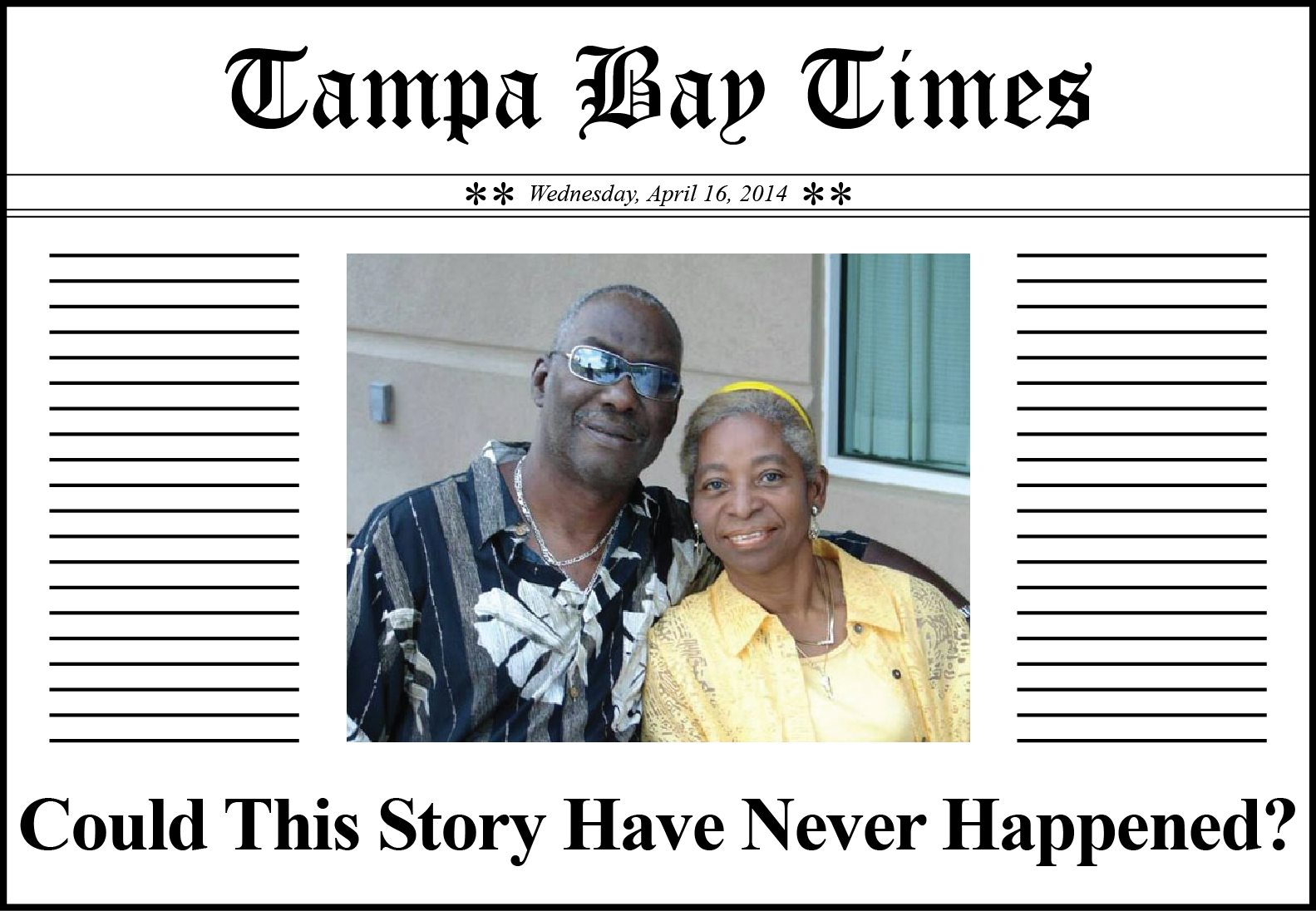
But now onto an interesting article that was recently in the Tampa Bay Times. The headline was “Low blood sugar cited in death of prominent community leader’s husband after Tampa police traffic stop.” If you would like to read the entire article, you can follow this link.

To give you a synopsis of the article, Officer Anthony Portman received calls of an erratic driver who was swerving onto the sidewalk and into a stop sign. When Officer Portman arrived at the scene and asked the driver, Arthur Green Jr. 63, to hand over the keys, Mr. Green became combative. Officer Portman called for backup and then called for Tampa Fire Rescue to send medics. When Cpl. Matt Smith, the backup officer arrived, he indicated that he had seen diabetic incidents before and suspected that this what Mr. Green was having, but because Mr. Green was resistant, the officers restrained him with handcuffs. At that point, Mr. Green stopped breathing. The officers attempted to give Mr. Green CPR but when the Fire Rescue arrived at the scene, Mr. Green had no pulse. He was transported to St. Joseph’s and after 19 minutes of trying to resuscitate Mr. Green, he was pronounced dead. He had a blood sugar of 29.

A few days after receiving the article, Laddie, my fellow blogger, sent me an email and asked what I thought about the incident. Both Laddie and I agreed that we had no idea of what Mr. Green’s diabetes history was. In pulling up whatever information I could about this incident, I do know that Mr. Green was not wearing a medical bracelet. There is no mention in any of the articles that I’ve read that Mr. Green had a CGM so I am assuming that he did not have one. The main issue of most of my blog posts is Medicare and their denial of coverage for the CGM. Mr. Green does not seem to fit in with this since he was 63 years of age and unless he was on Social Security Disability, he obviously wasn’t on Medicare.

Tampa StoryAfter thinking about this situation for a few days, I decided that the broader issue is that this man died because he didn’t have a CGM. Had he had one, he would have been alerted of his falling blood sugar in enough time to make a correction to get his blood sugar elevated. The reason why he didn’t have one isn’t the important part of the story.   It’s the fact that he didn’t have one. It proves the point that the CGM is a lifesaving device and that anyone, whether young or old, on Medicare or not, could be saved from a preventable death with the use of this device.

This could have been my husband. He’s had quite a few incidents where the same thing could have happened to him as happened to Arthur Green Jr. Call it luck or a higher power. My husband has been fortunate enough to have been stopped by officers who recognized immediately that he had a medical problem (he does wear a medical alert bracelet) and notified EMS quickly enough for them to get to the scene and administer glucagon (a hormone that stimulates your liver to release stored glucose into your bloodstream.  It is used as medication to treat someone with diabetes that has become unconscious from a severe insulin reaction). He does not have a CGM presently. This has been what our 1 ½ year long appeal has been about.

Entertainment people always say that any press is good press whether it’s positive or negative. So in this instance, The Tampa Bay Times calling attention to the unnecessary death of Arthur Green Jr., as sad as this death is, calls attention to the fact that this can happen to any diabetic at any time. If only Medicare would be aware of this incident and understand that those people who are asking for coverage for their CGM are not doing it because they want another piece of equipment to attach to their bodies. They just want to assure themselves that they are safe and able to keep others safe as well.

It’s so difficult to understand why Medicare just doesn’t get it.  IF ONLY they did.


What I Need/Want/Deserve

Laddie_Head SquareOn Sunday April 6 The New York Times published an article by Elisabeth Rosenthal titled Even Small Medical Advances Can Mean Big Jumps in Bills.  A friend without diabetes alerted me to the article and I read it along with the comments. For the most part I avoided social media for the rest of the weekend and had time to stew over my reactions to the article.

On one hand it was good to see Type 1 diabetes highlighted by the media.  Parts of the article were correct, but other parts made me feel uncomfortable and marginalized. I work hard to control my diabetes and I have been quick to give credit to my pump and CGMS for greatly improving my health and quality of life. I have no major complications and after my hospitalization at diagnosis in 1976, I have never been hospitalized except for childbirth. I thought that was a good thing.

Although I realize that my day-to-day medical expenses are high, I have been a “cheap” patient when it comes to acute care. Even my chronic care expenses do not surpass the total of my insurance premiums and my high deductible. Insurance companies are not making money on me, but they’re not losing their shirt either. That doesn’t mean that I could have gotten along equally well without insurance. My biggest financial benefit of having insurance is getting access to insurance-contracted rates. The insanity of our healthcare system is illustrated every time I see an EOB (Explanation of Benefits). Without insurance I would pay two or three times what my insurance pays for any procedure, lab test, or office visit. But that’s a topic for another day.

Most of you have already seen this excerpt from the article:

That captive audience of Type 1 diabetics has spawned lines of high-priced gadgets and disposable accouterments, borrowing business models from technology companies like Apple: Each pump and monitor requires the separate purchase of an array of items that are often brand and model specific.

A steady stream of new models and updates often offer dubious improvement: colored pumps; talking, bilingual meters; sensors reporting minute-by-minute sugar readouts.

 If you want to understand at my outrage/disappointment/fear at these comments and the whole article, please check out Kelly Kunik’s letter at her blog Diabetesaliciousness.  For some other well-thought out responses to this article, check out Amy’s post at Diabetes Mine and Bennet’s letter at Your Diabetes May Vary. Or just explore the DOC and you’ll find other great posts on this subject.

I have a few things to confess talk about here. Throughout most of my diabetes career, I have been considered a model patient who is compliant and all of those other adjectives that can be tossed about. One of my endos once told me that “You can get anything to work”. In a sense, I can and have. But the idea of going back to NPH and Regular or a once-a-day Lente injection is terrifying. I rarely make it through a night without at least two or three alarms from my Dexcom that my BG is too high or too low. I use my pump for multiple .25 or .375 corrections every day. That’s impossible with a pen and extremely difficult with a syringe.

But I could survive if I went back to syringes and vials. I don’t know whether I would have more complications than if I had never gone on the pump. I have had approximately the same A1c while pumping that I had with Lantus and Humalog injections, but my highs are not as high and my lows are not as low. I spend much more time in my “target range” and I feel much better. I believe that I am safer because my insulin delivery is more precise and predictable.

Although I have used various CGM devices for over 5 years, the Dexcom G4 has been the most life-changing. In the last year and a half with my G4, I have not once needed my husband to help me with a hypoglycemia episode. I have not wandered around a strange hotel room in the middle of the night desperately trying to find something to eat and then trying to figure out how to chew and swallow. I have hiked hundreds of miles without requiring a Glucagon injection. Bad golf scores have been the result of my bad golf swing and not the result of BG readings in the 30’s and 40’s. My only interaction with firemen/paramedics has been taking my grandchildren to see the firetrucks and ambulance.

Is a pump and/or CGM a luxury “gadget” for me?  The first night in July without my Dexcom when the transmitter died, I woke up with a BG reading of 37. But at least I woke up. If my pump is denied by insurance, will an uninsured T1 diabetic get access to insulin? If I had to choose between my pump and my iPhone, what would I choose? (My Pump.) Should children get access to artificial pancreas technology while senior citizens can’t get CGM coverage by Medicare? If I lived in a country such as the U.K. with national health insurance, would I even qualify for a pump or CGM? What would my current health status and the cost of my care be if I were still checking my urine to determine my BG control and taking only one injection of Lente per day as I did in 1976? Would I still be alive?

I don’t know.

These are important questions.  As I get closer to Medicare age and our country moves closer to universal healthcare, I realize that not every decision related to my diabetes care with be in my favor. No healthcare system will ever have enough money to give Cadillac care to every individual at every stage of life with any health issue and despite unknown return on investment for that care. Some of the toughest questions that must be addressed are:

  • How do we measure value?
  • At what point are increased costs not justifiable in comparison to increases in quality of life and health status?
  • Are these decisions death panels or a reasonable allocation of limited resources?
  • Is it short-sighted to limit access to pumps and CGMS and then willingly pay for dialysis and amputations?
  • How do we decide between keeping 16-week premature babies alive while denying tests strips to millions of people with Type 2 diabetes?
  • Should there be an age limit on joint replacements and organ transplants?
  • How can drug and device companies develop better technology and improved pharmaceuticals if these products are not reimbursable expenses?

Measuring ValueI think that each one of us could add multiple questions to that list. The patient profiled in the NYT article concludes that “You want me to be able to afford good treatment…Because otherwise I end up disabled.”

Does anyone care?

Scary times, my friends with Type 1 diabetes.

UNFAVORABLE

Sue B_Head SquareUNFAVORABLE….a word that I really didn’t expect to see. Eight long months of waiting for a decision and when it finally came, it was UNFAVORABLE.

In June of 2012, my husband Marc, a Type 1 diabetic with hypo and hyperglycemic unawareness, entered the Medicare system. A few months later, his Continuous Glucose Monitor (CGM) malfunctioned and needed replacement. His private insurance had always paid for the CGM and sensors without any question, and it never occurred to us that Medicare wouldn’t pay as well. We were wrong. Soon after his endocrinologist sent in the prescription for a new CGM, we were notified that our supplemental insurance, Highmark Freedom Blue, had denied coverage because under Medicare guidelines, CGM is “precautionary” and not covered. Thus began the long road through the Appeals process.

I have been writing of this journey for the past eight months on this blog site. We went through Levels 1 and 2 rather quickly, but Level 3 with an Administrative Law Judge (ALJ) was frustrating to the point of wanting to pull out our hair. There are approximately fifty-six ALJ’s spread throughout the United States and most of the hearings are by telephone. Our telephone hearing was on June 26, 2013. Prior to that date, we sent the ALJ documentation that included a graph of Marc’s blood sugar over a period of a month and various research articles from experts in CGMS. Also included were our statements explaining how our lives had been before the CGM and how they had improved once Marc had a CGM. And then of course, we described how our lives had reverted back to what it was in the pre-CGM days. We also sent a letter from Marc’s endocrinologist explaining how the CGM works and the importance of Marc having one. More details of this story are outlined in my blogpost “A Crusader for Medicare Coverage of CGM”.

We had our telephone hearing in Marc’s endocrinologist’s office. Marc, his endocrinologist, and I all testified. I wrote about this in my “Dear Judge Smith” post and described the frustration we experienced in the months waiting for the Decision to be made. When I wrote that blogpost, we had already been waiting four months. During the next four months, I periodically called the Judge’s Legal Assistant and practically begged for help. Each time I was told that he was not able to divulge any information, that it was on a first come, first serve basis, and that our decision was in “queue” waiting to be drafted.

On Tuesday, February 25th, after eight very long months of waiting, the decision finally came. I was expecting a FULLY FAVORABLE DECISION. I had seen at least five FULLY FAVORABLE DECISIONS from other people whom I had been in contact with over the past months. Their cases were so similar to my husbands that I thought there could be no other decision. Much to my surprise, when I opened the envelope and pulled out my husband’s decision, it was an UNFAVORABLE one. The Judge stated:

While very sympathetic to the appellant’s medical conditions, the ALJ finds that in accordance with guidelines presented in L11520 and Medicare Advantage Medical Policy Bulletin Number E-15, the plan is not required to preauthorize or cover a continuous glucose blood monitor and accessories, because the device is not covered under Medicare’s rules and regulations or otherwise under the EOC.”

The Judge acknowledged that the “appellant has brittle diabetes, and hypoglycemia and hyperglycemia unawareness. His diabetes is difficult to control and his blood glucose fluctuates widely. He has used a continuous glucose monitor for several years prior to enrolling in Medicare. The appellant’s glucose monitor was covered under his private insurance policy with Highmark Blue Shield prior to enrolling in Medicare”.

I understand his statement. However, I have a copy of a different Judge’s decision in a similar case and his ruling was:

“Policy Article A33614 calls continuous blood glucose monitoring “precautionary. The logic of this Policy Article is flawed in this respect and I decline to follow it”. He then goes on to say that “After all, isn’t all blood glucose testing precautionary whether using a continuous blood glucose monitoring system or glucose meter and test strips—as both methods can only tell you that your blood sugar is too high or too low or normal.” He continues “Still further, while the device could arguably be classified as “precautionary” (at least in those instances where the reading is not hypoglycemic or hyperglycemic) they are no more precautionary than standard blood glucose monitors and test strips that are covered my Medicare”.

Furthermore, this gentleman’s hearing was on October 29, 2013 and the Judge rendered his decision on November 6, 2013, just a week after the hearing…not eight months after the hearing.

Two Judges hearing very similar cases and two different opinions. I guess we got the wrong Judge.

Unfavorable_3We are going to soldier on and are now preparing for Level 4.  We will draft an argument explaining why we disagree with the Judge’s decision and present it to the Medicare Appeals Council (MAC). I don’t know what to expect from this. In my perfect world, they would overturn the Judge’s decision. But I am not so sure there will be a perfect world for this. Still I have hope—-or at least try to have hope.

I hope that you have read my blogpost “Join the Crusade”. If you haven’t already done so, please follow the links in the blog and write your Congressperson to let them know how important a CGM is to the health and safety of any diabetic with hypoglycemia unawareness. We need to show our support for H.R. 3710, the Medicare CGM Coverage Act that was introduced into Congress by Congresswoman Carol-Shea Porter. Also, you can go to https://www.popvox.com/bills/us/113/hr3710 to quickly vote to support this bill. It only takes a few minutes and if you fill in the general information, your Congressperson will be notified of your support.

As I have said repeatedly, this issue is not only important to those on Medicare now, but also to the vast number of people who will be entering Medicare in the future. Believe me, you don’t want to have to go through the frustrations that we have experienced fighting for Medicare coverage of the CGM. It’s 100% exhausting, time consuming and frustrating.

UNFAVORABLE….a word that I really didn’t expect to see.

Dear Representative Collins

Sue May 2013_Head SquareOn January 16th at 6:01am I sent the following private message on my Congressman’s Facebook page:

Rep. Collins, I am a type 1 diabetic approaching Medicare age and I use a continuous glucose monitor (CGM) to track my blood sugars and keep myself safe from falling blood sugars. My health insurance pays for this device, but under Medicare law it is not covered. I ask you to support H.R.3710, the Medicare CGM Coverage Act of 2014. This bill would allow Medicare to cover Continuous Glucose Monitoring Systems (CGMs) if recommended by a doctor. Thank you for your anticipated support of this bill.

I never got a response. Maybe that wasn’t the correct way to go about contacting him; I’m not sure. Perhaps I should have sent a letter in the mail or contacted him through his website.

In the meantime on February 17, Sue from Pennsylvania published her Join the Crusade post which encouraged people with diabetes or affected by diabetes to become involved in the fight for Medicare coverage of CGMS.  Her post gave instructions on how to email the Legislative Assistant for Health Issues of one’s Congressperson and ask for his/her help in conveying to the Representative the importance of supporting H.R. 3710: Medicare CGM Coverage Act.  A sample letter was provided.

Sue, with help from Laddie and me, followed her blogpost with an intensive push to contact other bloggers and ask them to share her story and the importance of H.R. 3710.  She received responses from several bloggers who either wrote blogposts about the issue or invited Sue to guest post on their site.  A big thank you to Kerri, Kim, Stephen, Diabetic Mainer, and all others who did this!  And many thanks to everyone who spread the message through Facebook, Twitter, and other social media.

Last week I sent my email to Rep. Collins’ Legislative Assistant for Health Issues using the form letter included in Sue’s blog and added the following paragraph to emphasize why this is so important to me:

I have been a type 1 diabetic since 1988, dependent on taking insulin in multiple doses every single day to stay alive. Although insulin is a natural hormone, type 1 diabetics no longer make insulin due to an immune system that goes haywire and attacks the insulin producing cells in the pancreas. Many things can go wrong when taking insulin, resulting in low blood sugars (hypoglycemia) and high blood sugars (hyperglycemia). These can happen very rapidly and without warning, resulting in confusion, coma and even death. The continuous glucose monitor (CGM) is a device the diabetic can wear to alert him or her to an impending low blood sugar in time to act before unconsciousness results. I have been wearing a CGM for 4 years, and have not had a low blood sugar that resulted in unconsciousness in that time. Before I got the CGM, I would have at least one episode every month, many resulting in 911 calls and/or emergency room trips. I will be 65 next year and on Medicare, and unless this law is changed I fear I will once again be experiencing low blood sugars and trips to the E.R. or worse.

Capitol Building_Collins3I am hopeful that I will get a response from either Rep. Collins or his assistant. And if I don’t get a response, I hope that he is so busy working on co-sponsoring the bill that he doesn’t have time to reply to me. I will happily accept that outcome.